reassembly
frames
perceptual fragmentation and re-composition
Reduced Perceptual Cues Research
Keio University, KMD-EM
2025 --

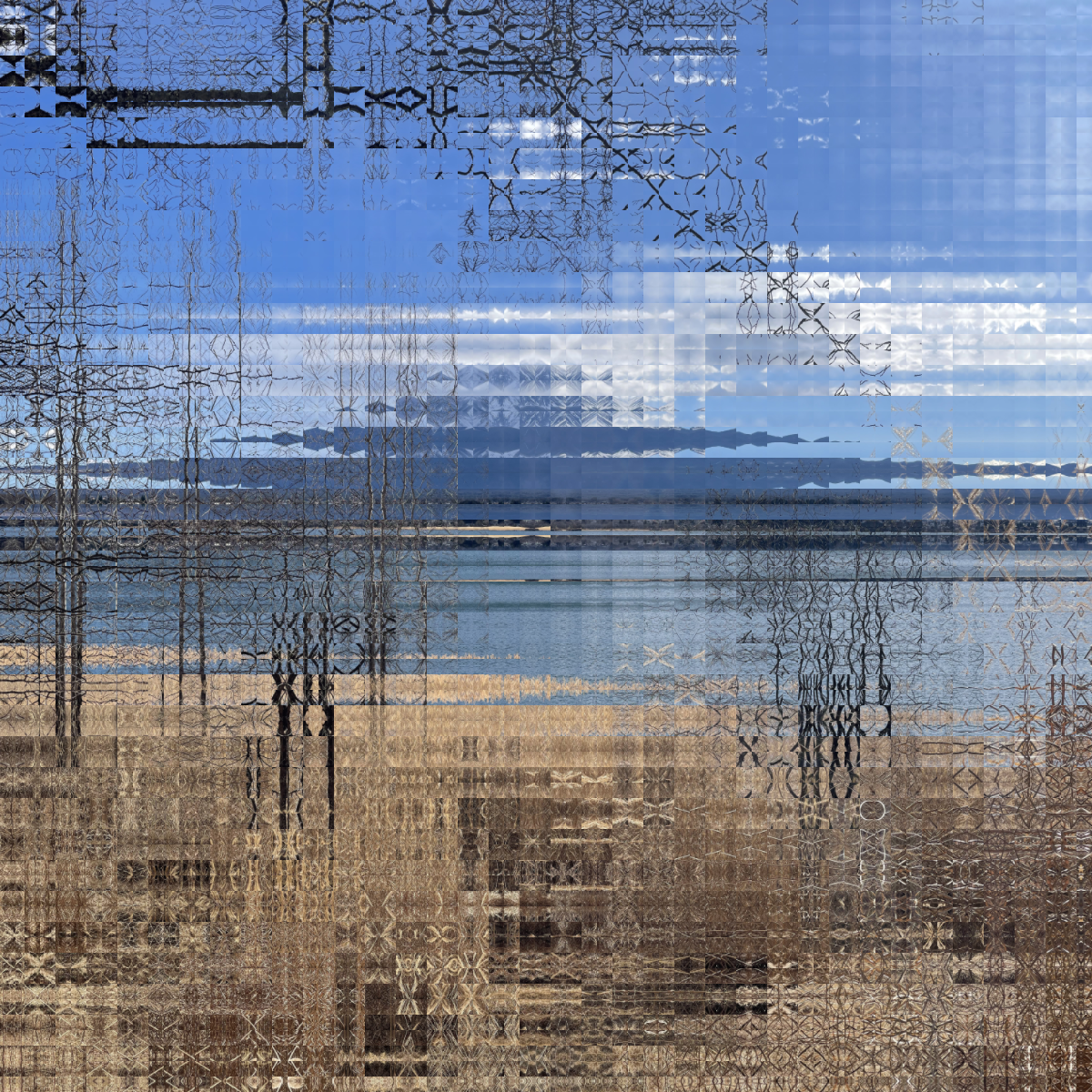

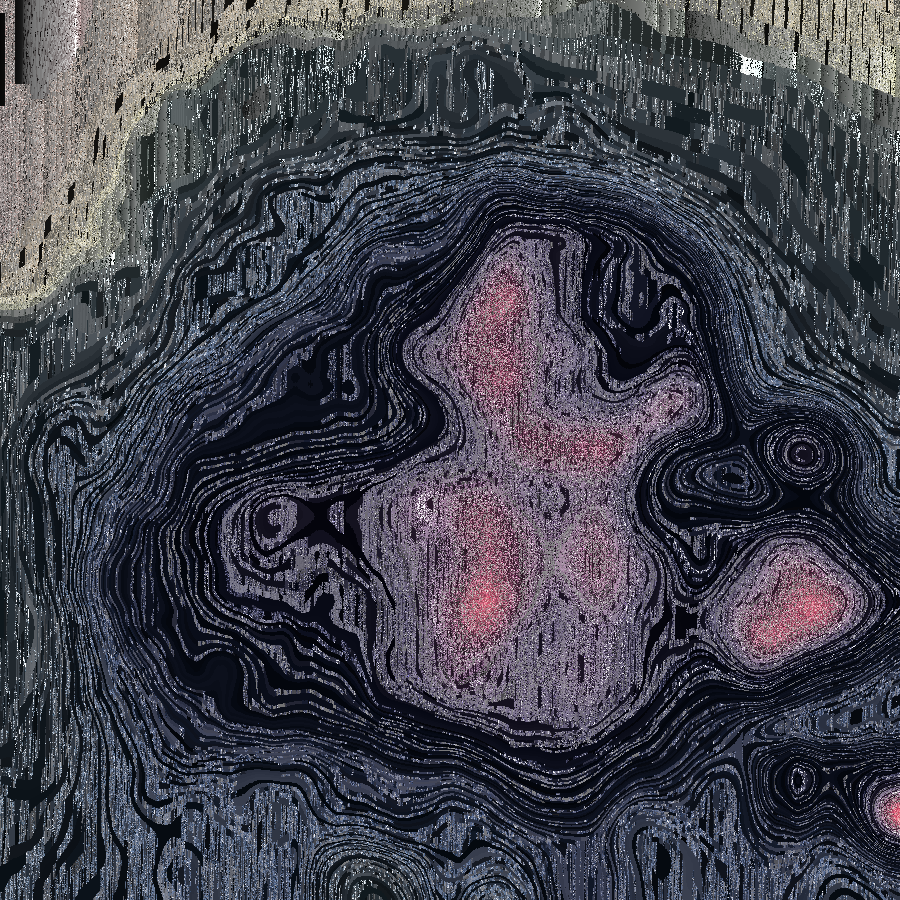


Reassembly Frames is an ongoing series of visual tools that explore how images can be transformed through perceptual reduction, fragmentation, and recomposition. Instead of aiming for faithful representation, the series investigates how minimal or partial visual information can still evoke coherence, atmosphere, or a sense of place.
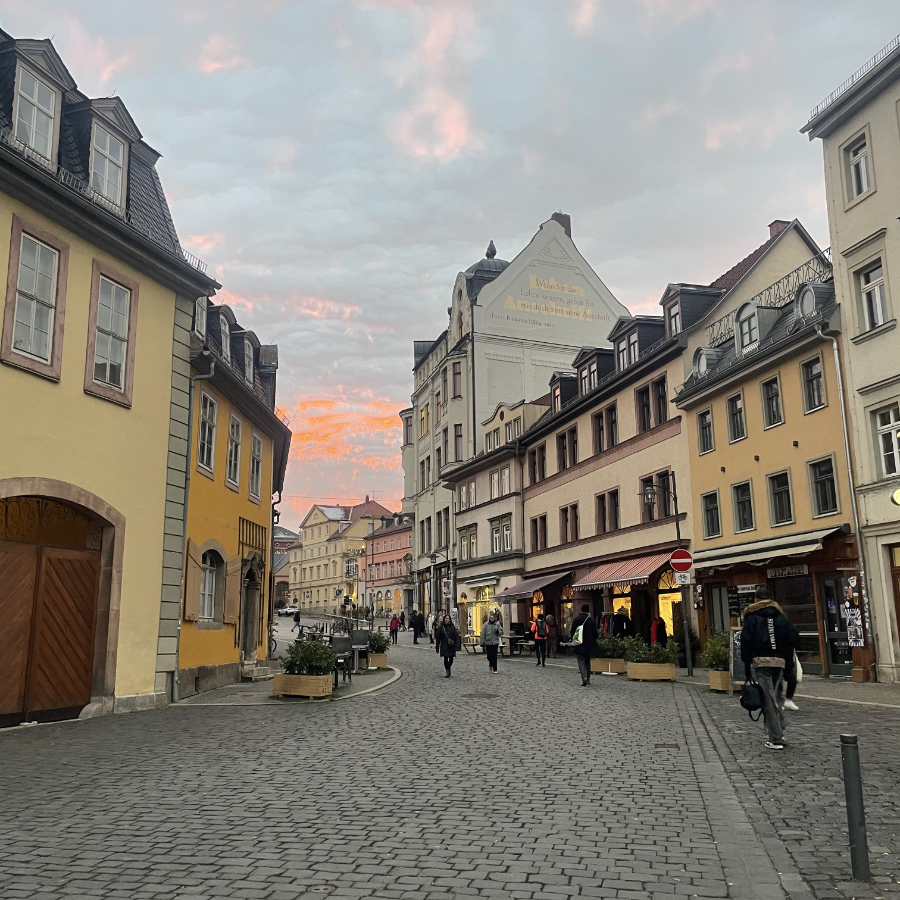
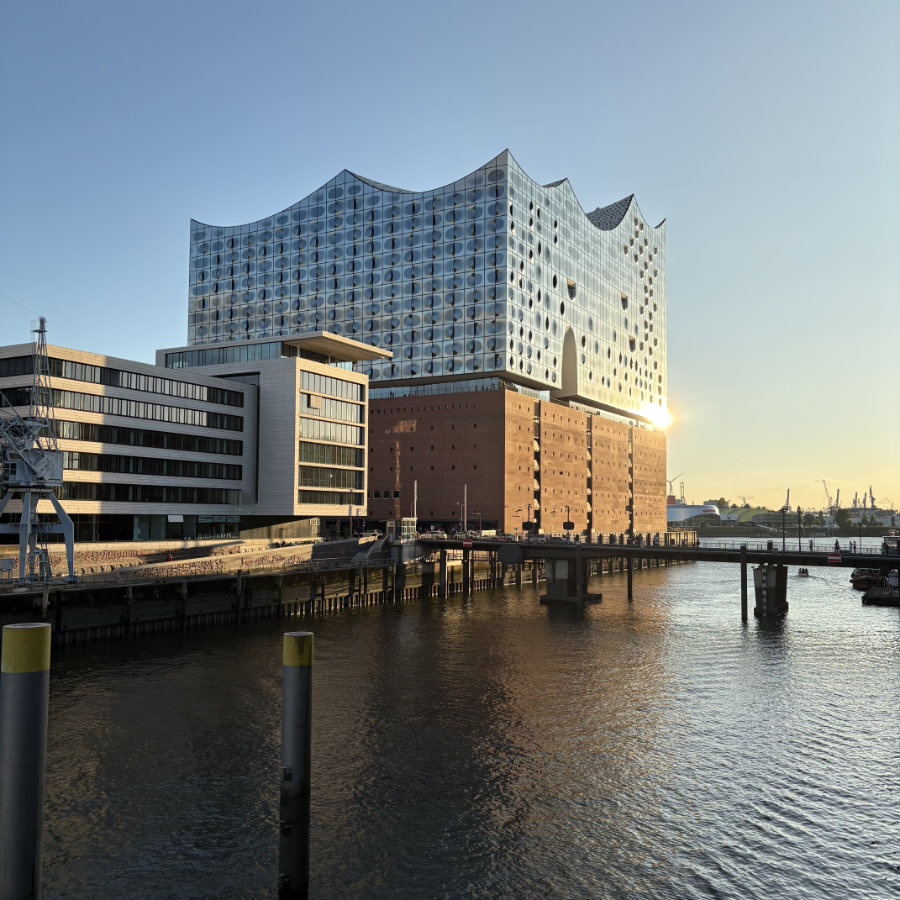
Each frame operates by breaking source images into discrete components and reorganising them through specific compositional logics. These processes may involve spatial subdivision, color redistribution, layering, or structural distortion. The resulting images retain traces of the original scene, yet shift away from recognisable depiction toward perceptual suggestion.
The series examines how perception operates when information is incomplete. Rather than reconstructing a precise image, viewers assemble meaning from gradients, rhythms, and spatial relations. This approach aligns with a broader research interest in low-definition environments, where suggestion replaces representation and cognitive load is reduced through the careful selection of perceptual cues.
Reassembly Frames functions as an open and extensible framework. Each variant introduces a different strategy for transforming images, forming a growing toolkit for reassembling visual material into reduced, atmospheric, or abstracted compositions.
Each frame operates by breaking source images into discrete components and reorganising them through specific compositional logics. These processes may involve spatial subdivision, color redistribution, layering, or structural distortion. The resulting images retain traces of the original scene, yet shift away from recognisable depiction toward perceptual suggestion.
The series examines how perception operates when information is incomplete. Rather than reconstructing a precise image, viewers assemble meaning from gradients, rhythms, and spatial relations. This approach aligns with a broader research interest in low-definition environments, where suggestion replaces representation and cognitive load is reduced through the careful selection of perceptual cues.
Reassembly Frames functions as an open and extensible framework. Each variant introduces a different strategy for transforming images, forming a growing toolkit for reassembling visual material into reduced, atmospheric, or abstracted compositions.
Tessellation Frame
Spatial subdivision and recursive recomposition
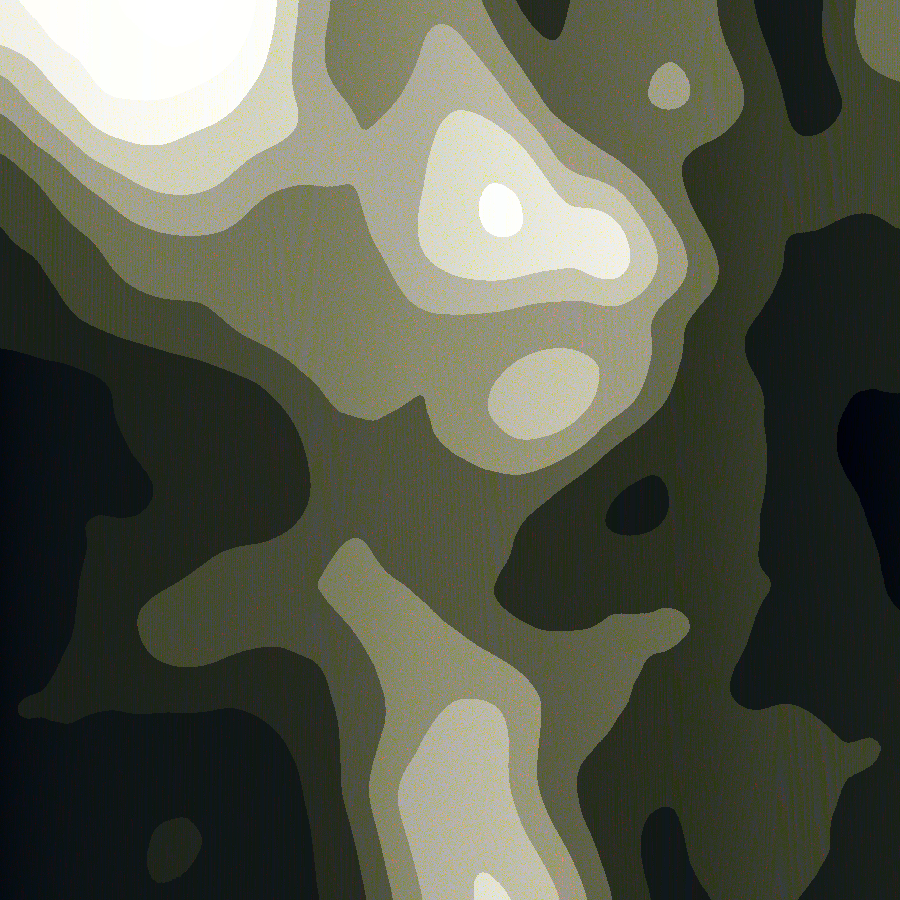
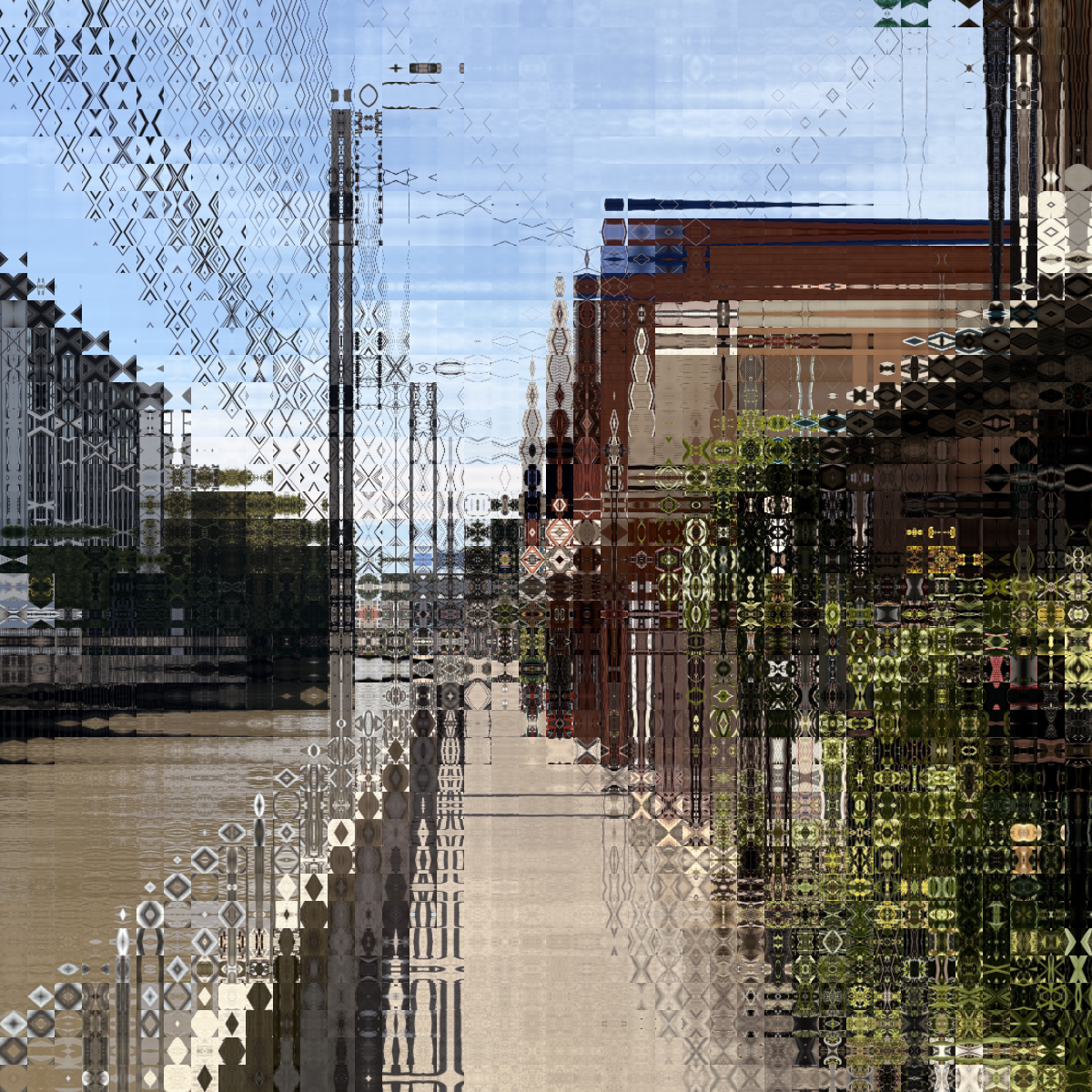
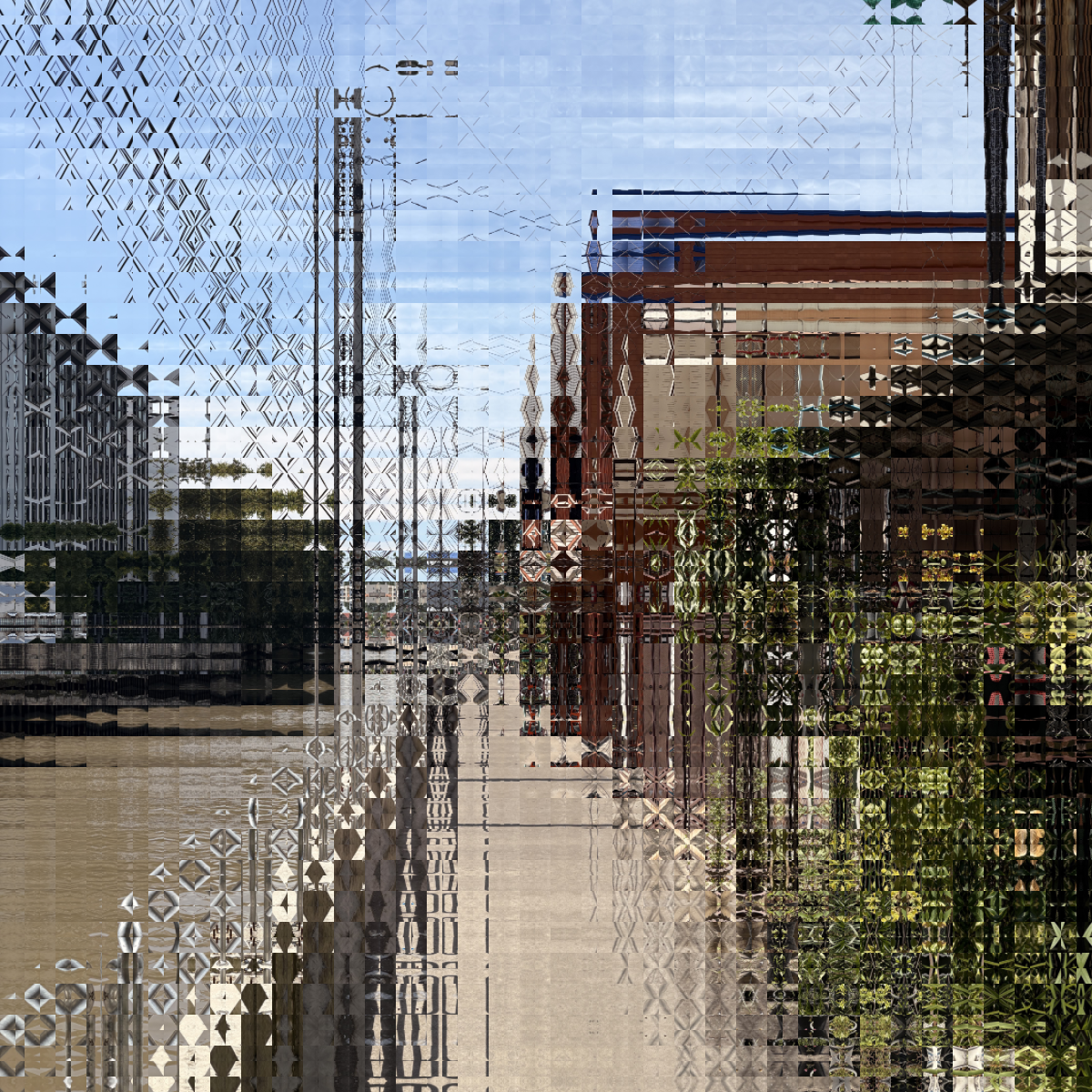
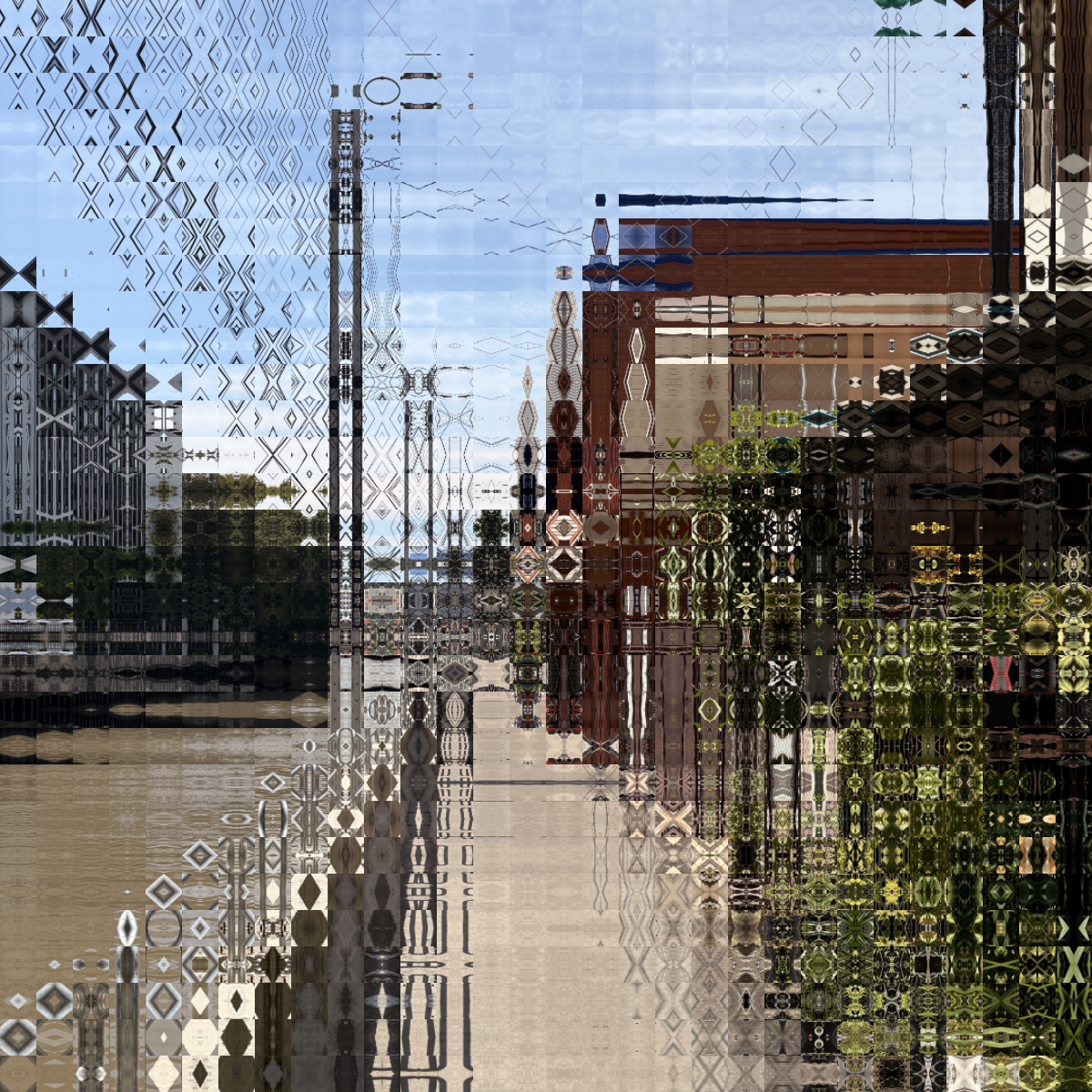
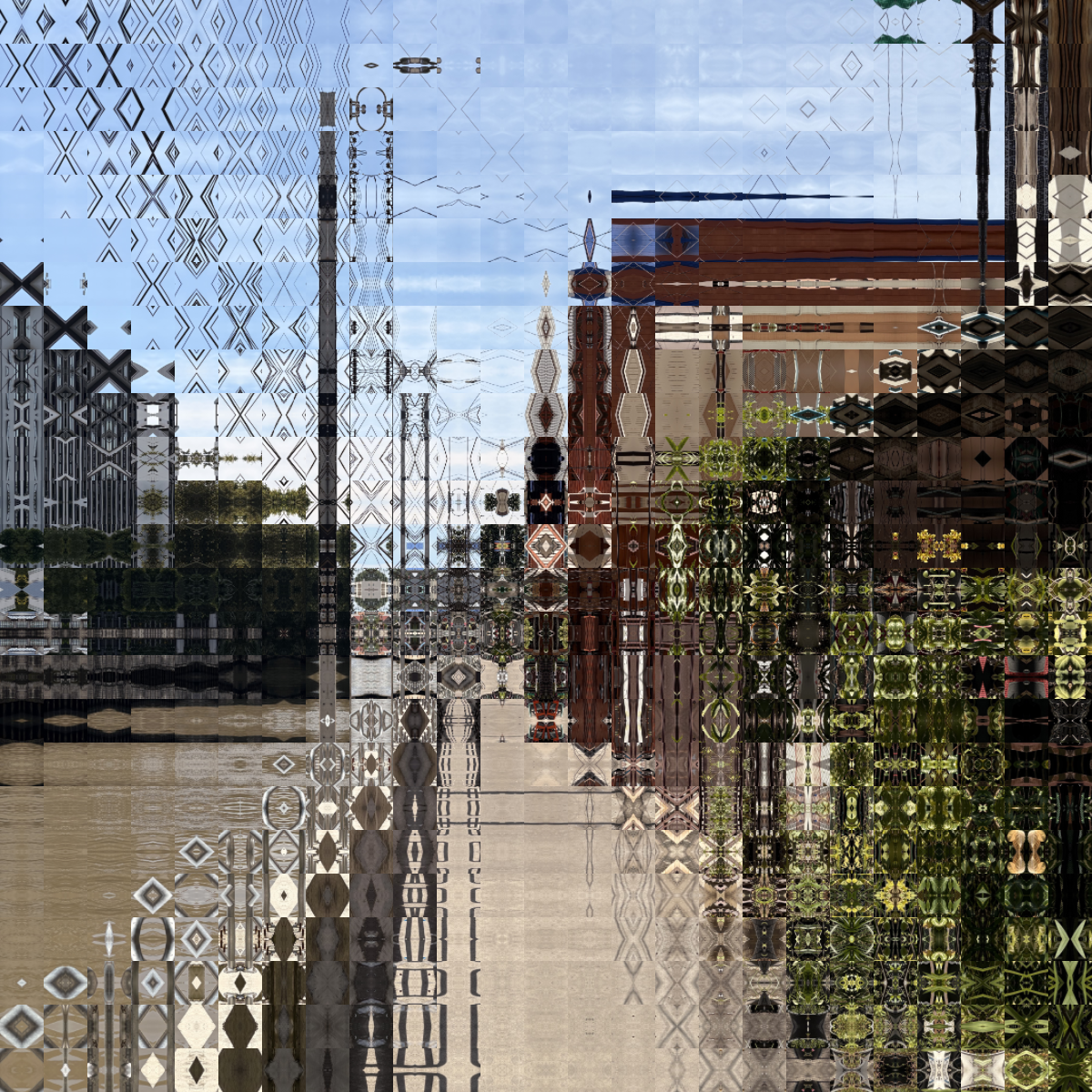
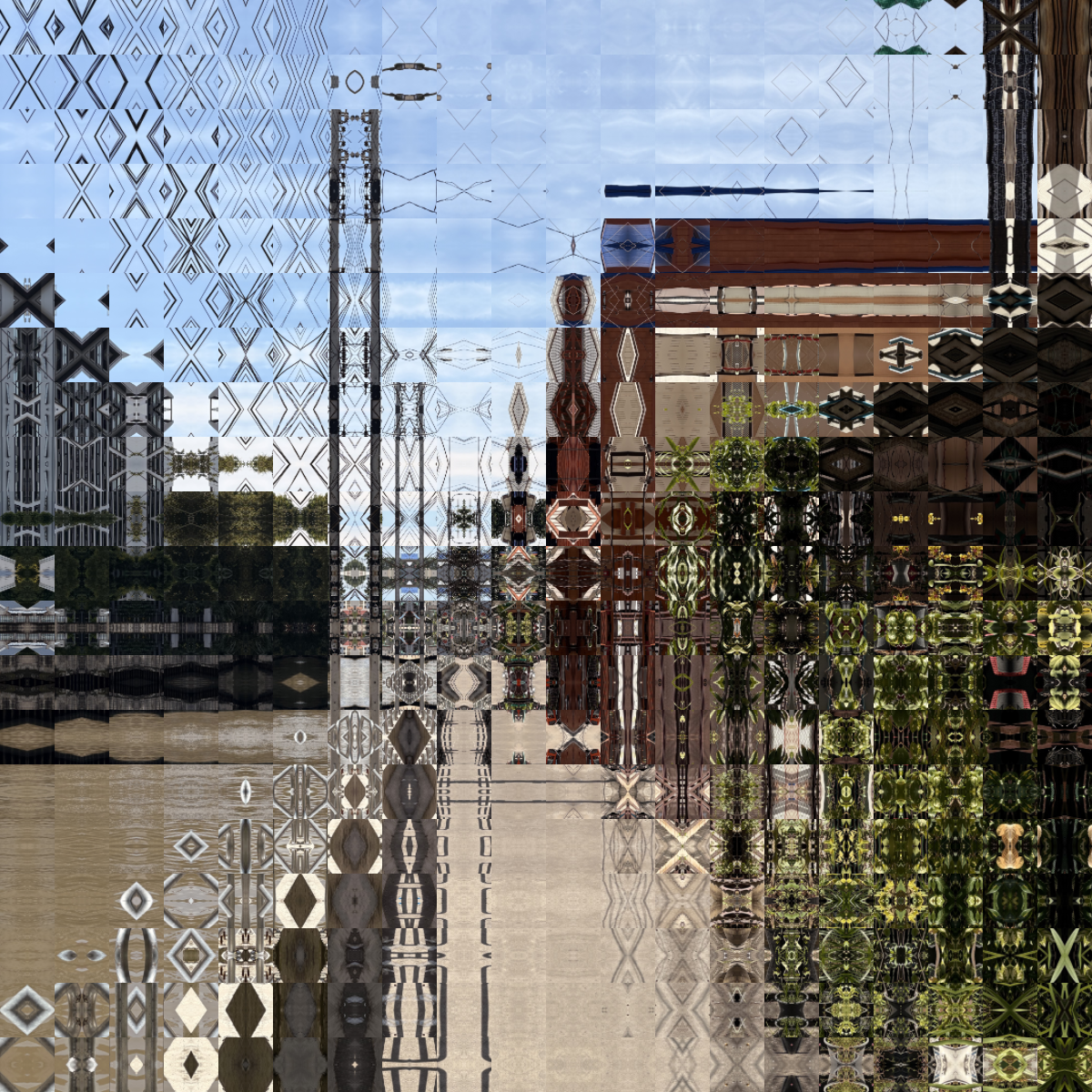
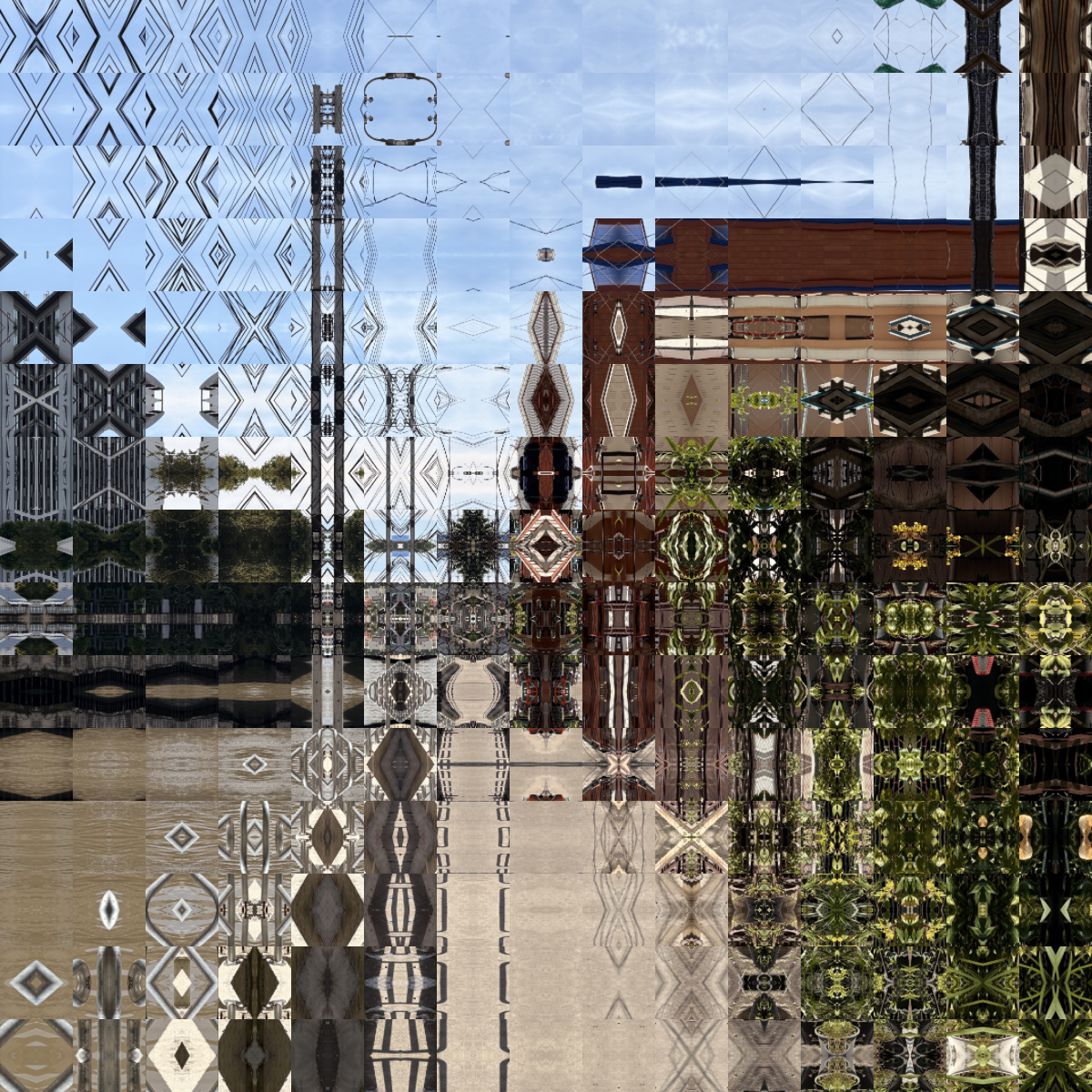
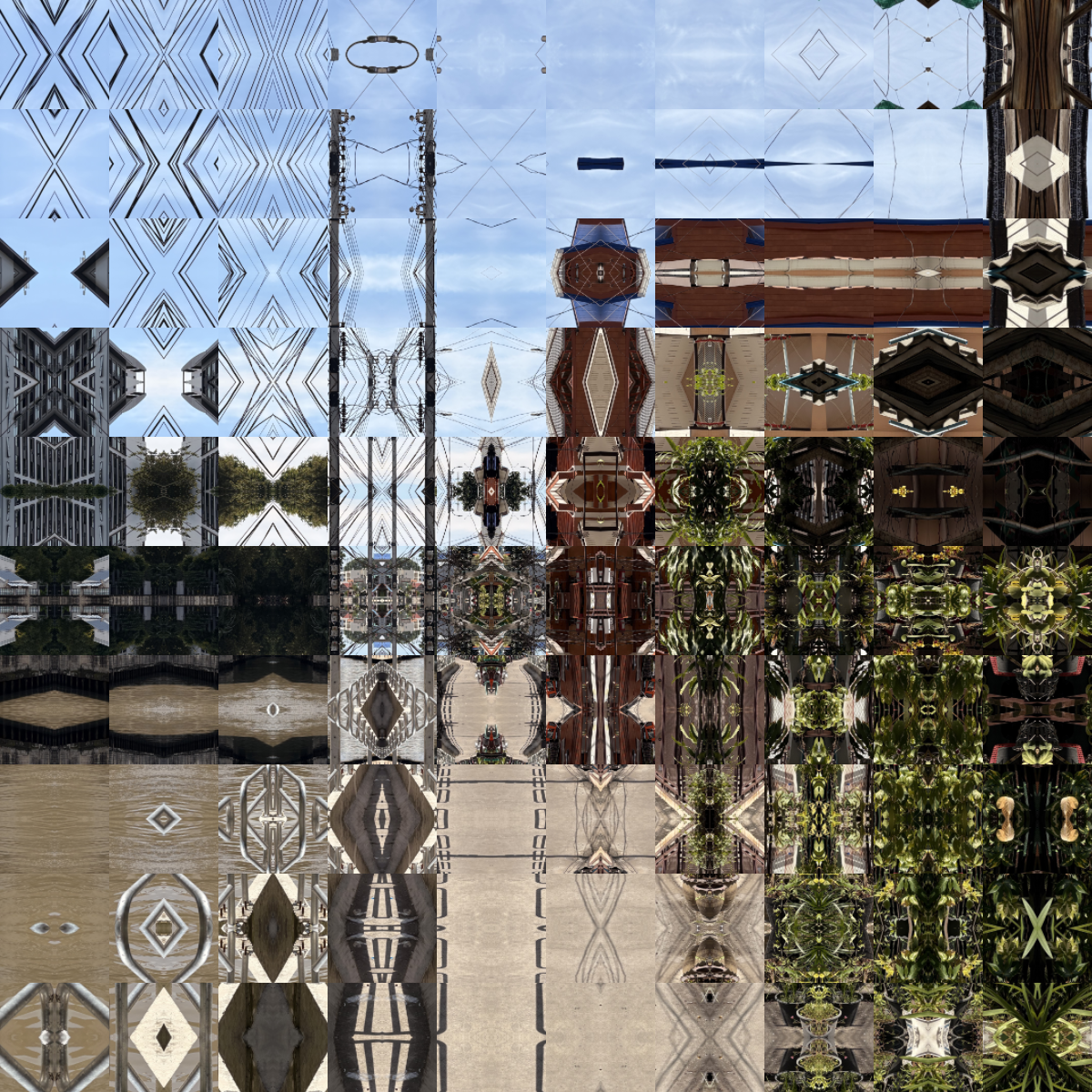
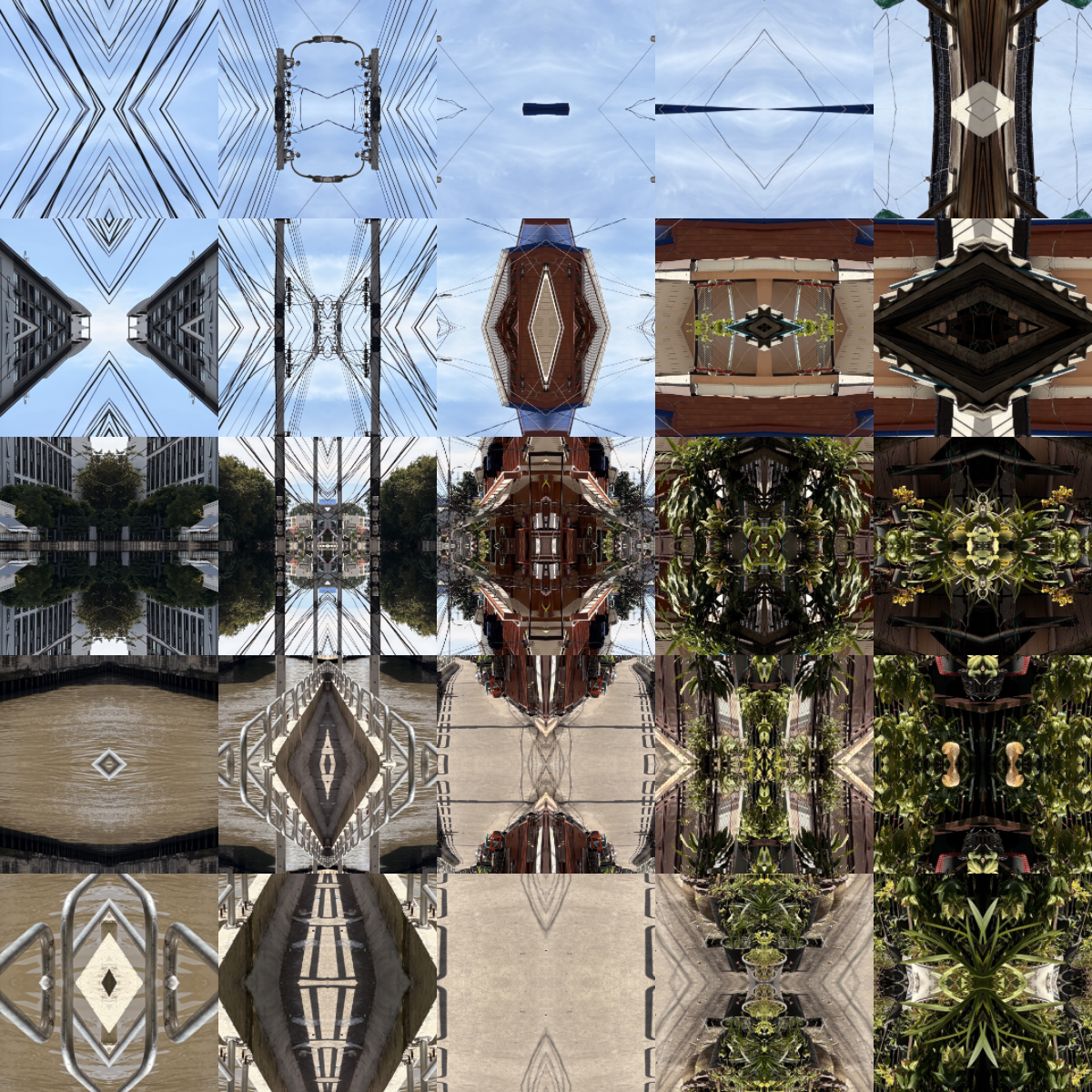
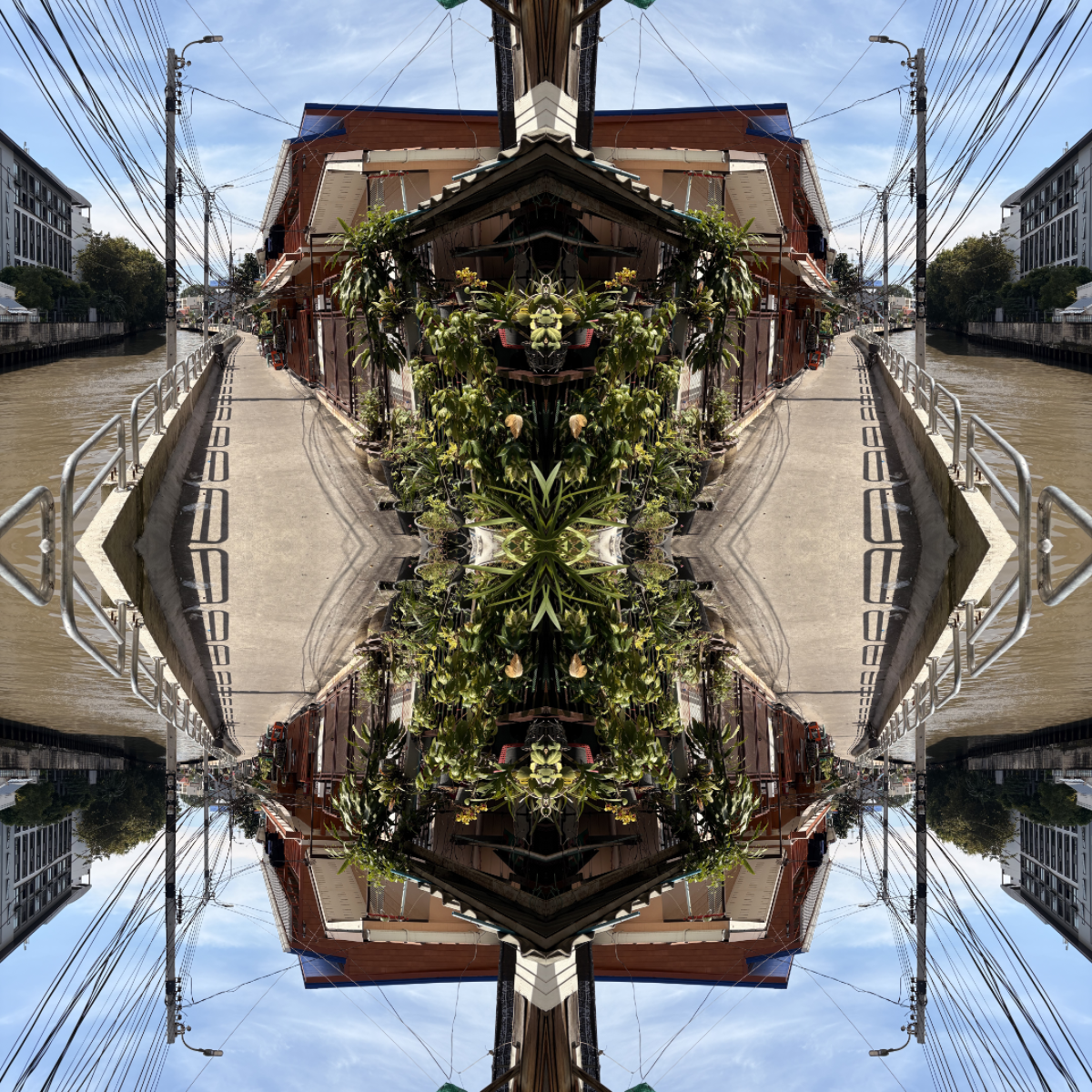
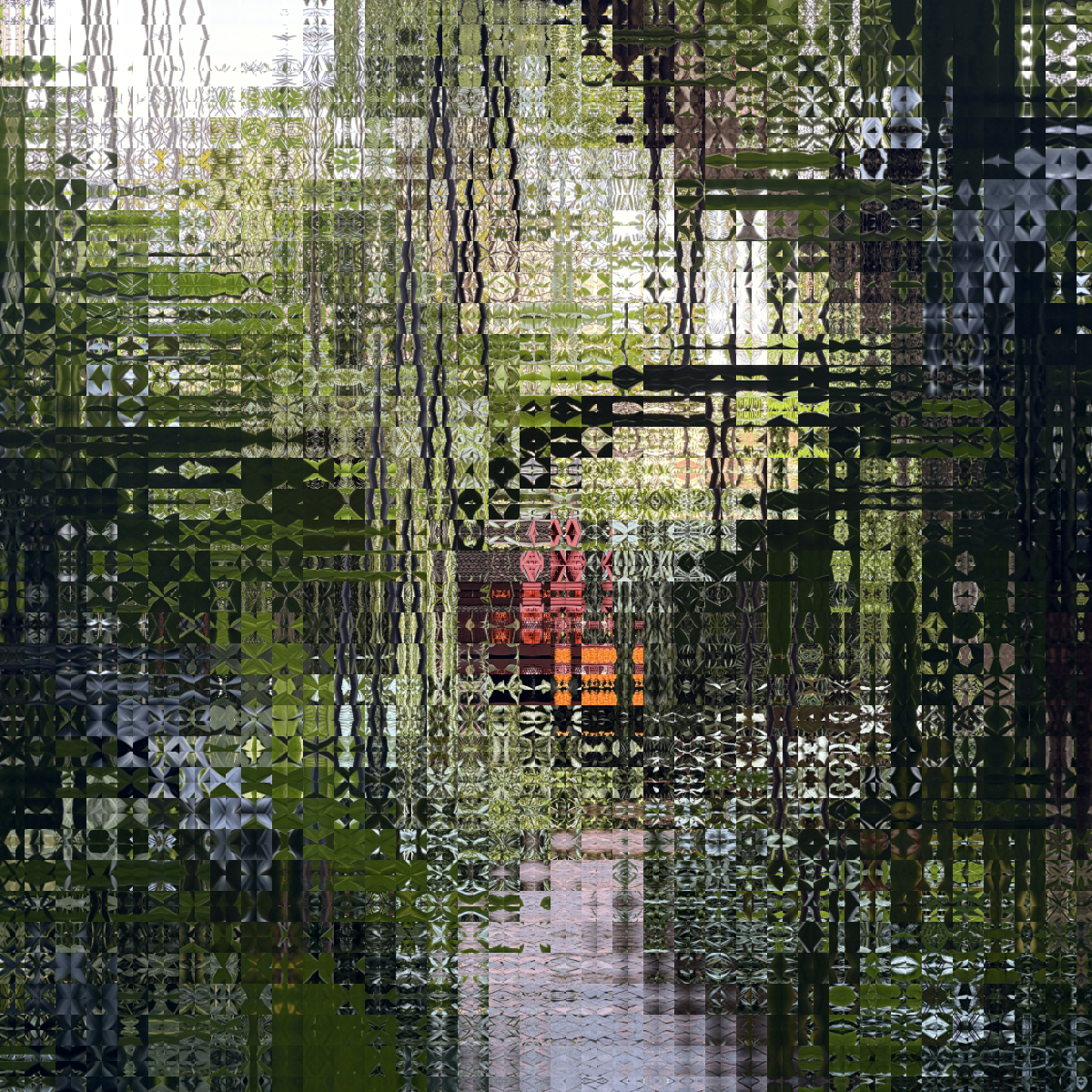
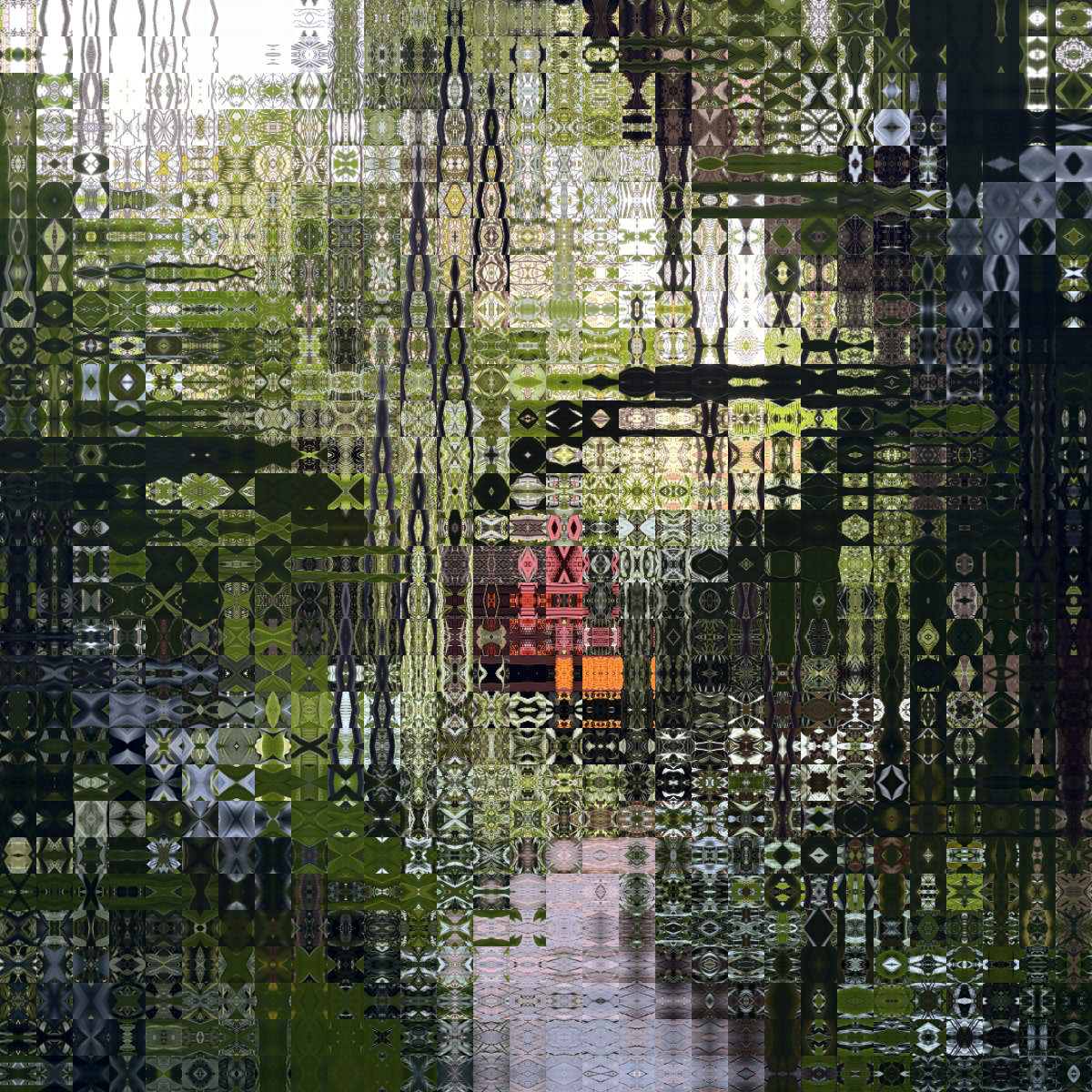
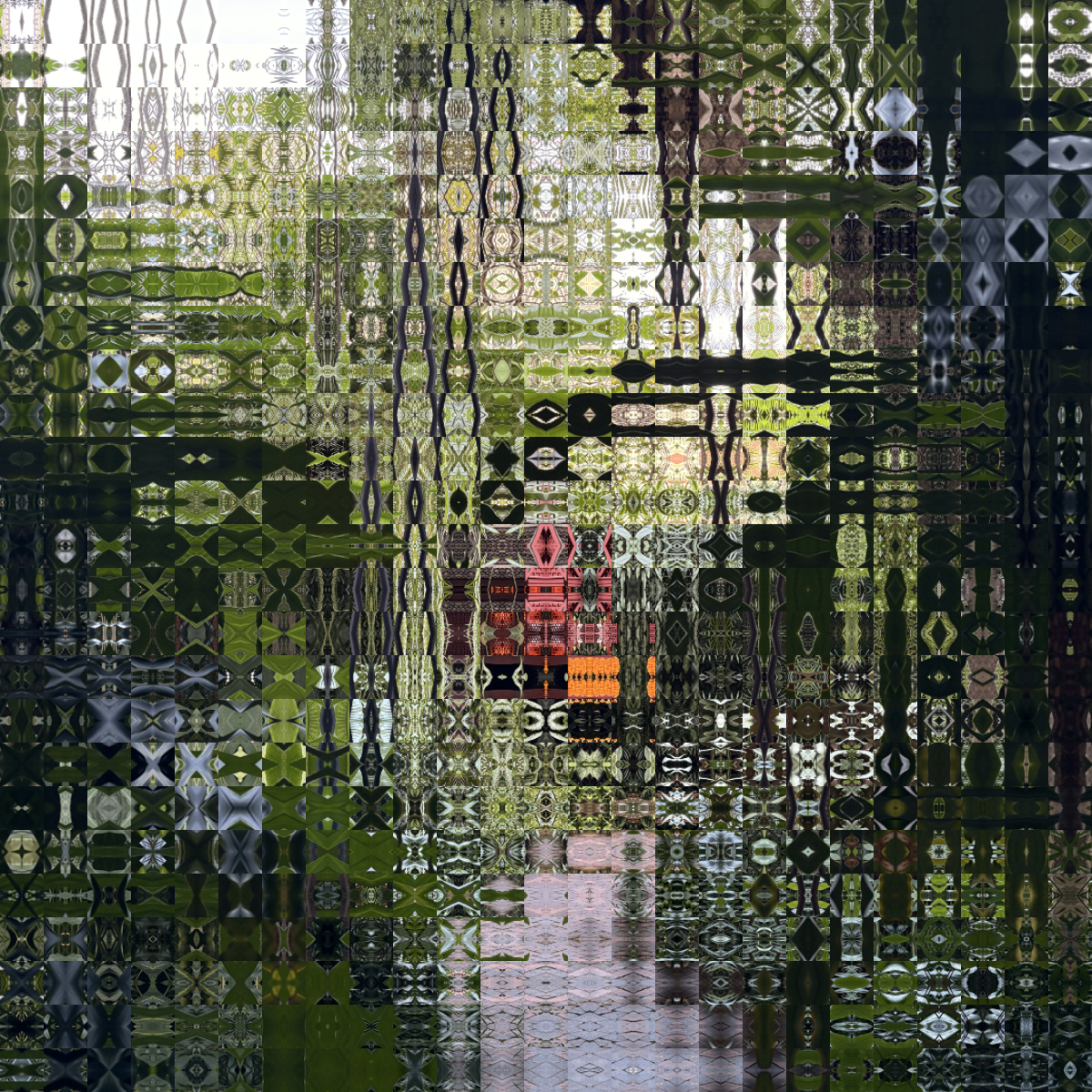
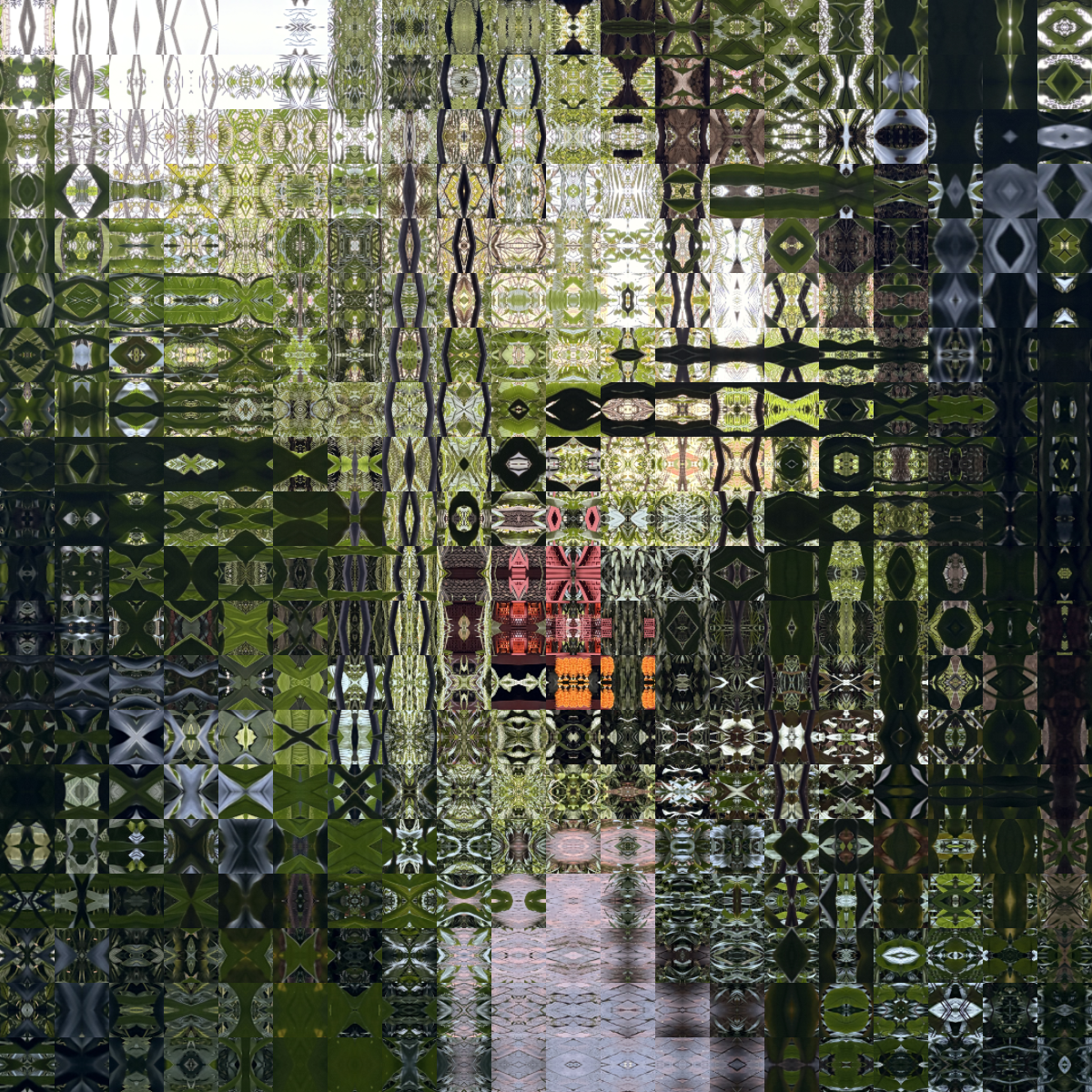
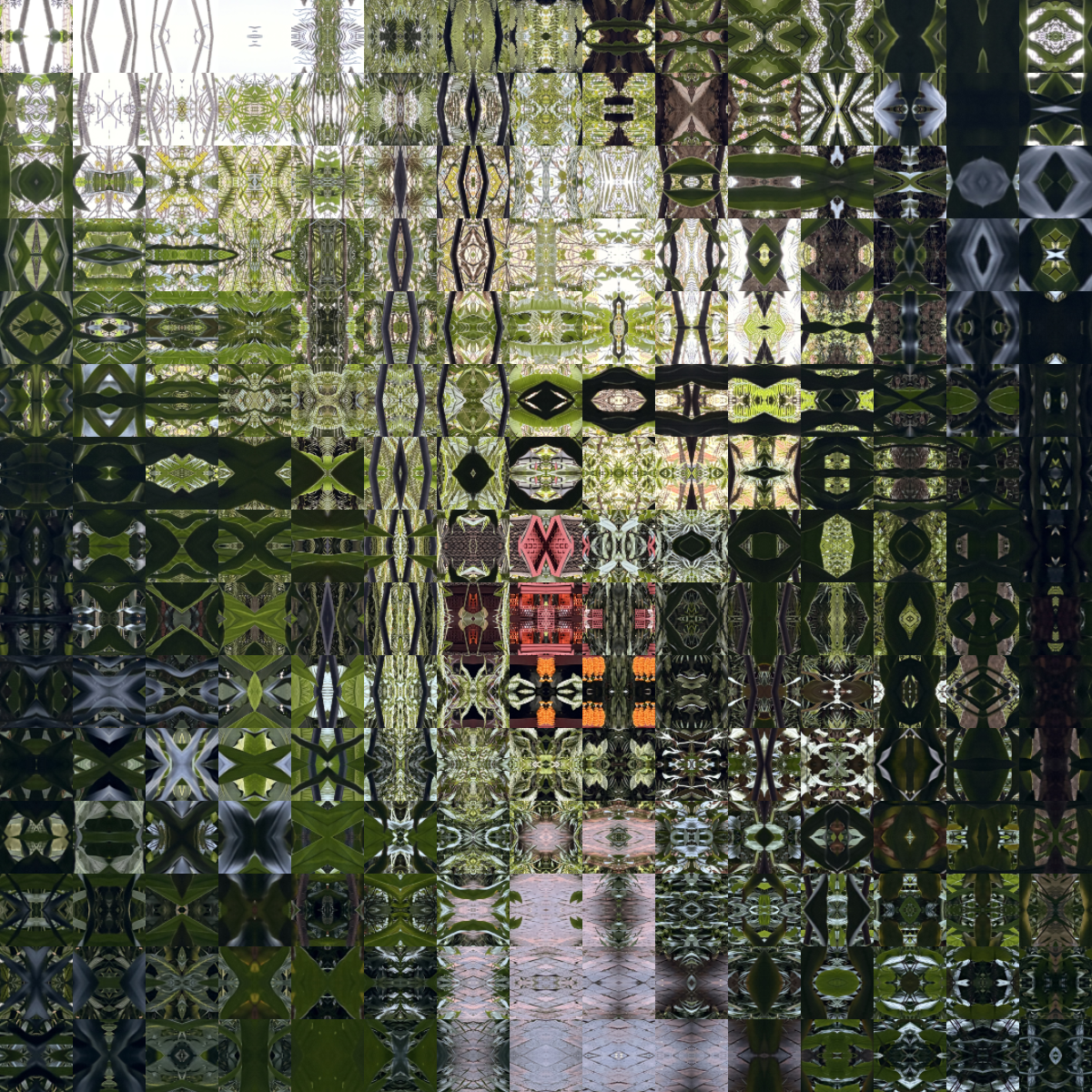
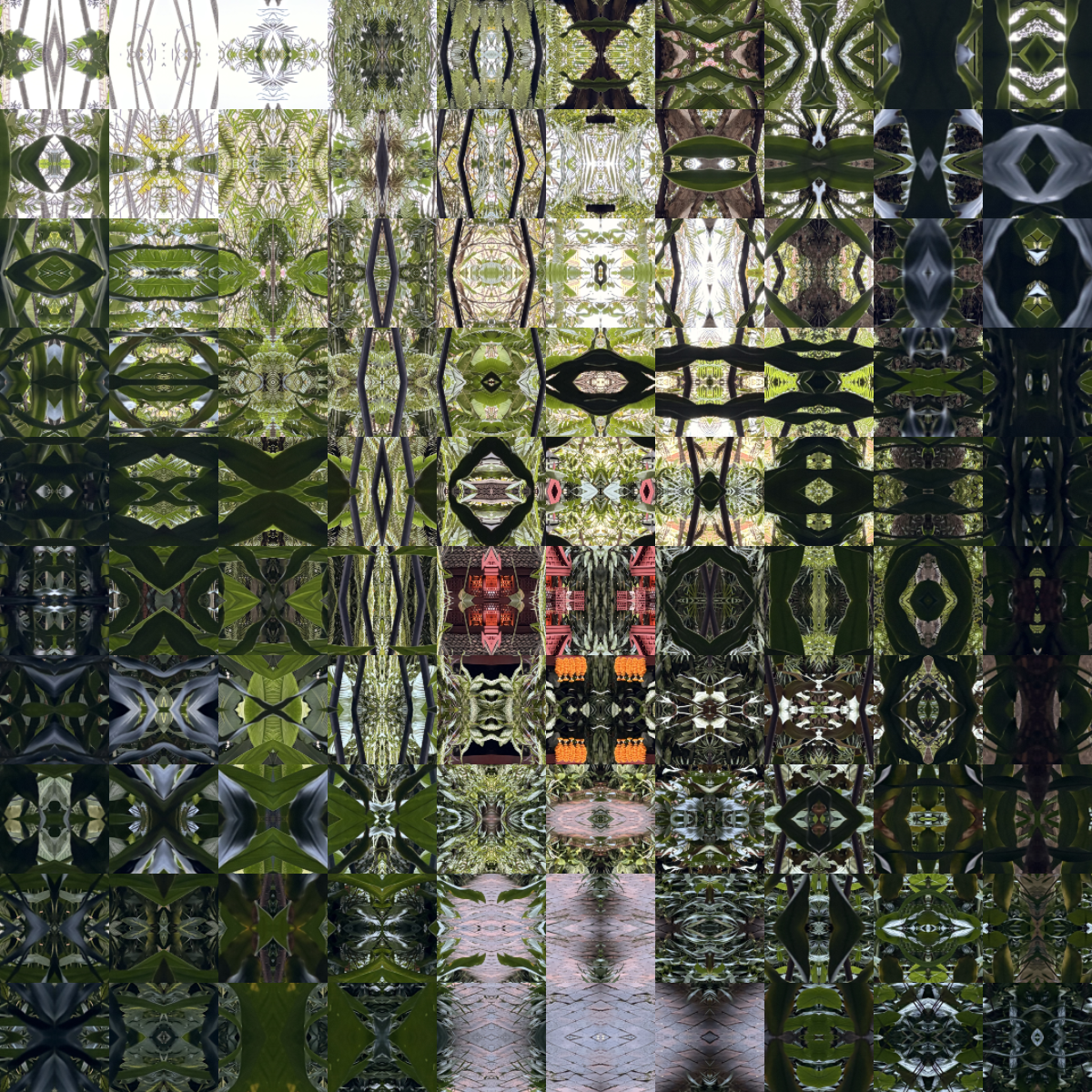
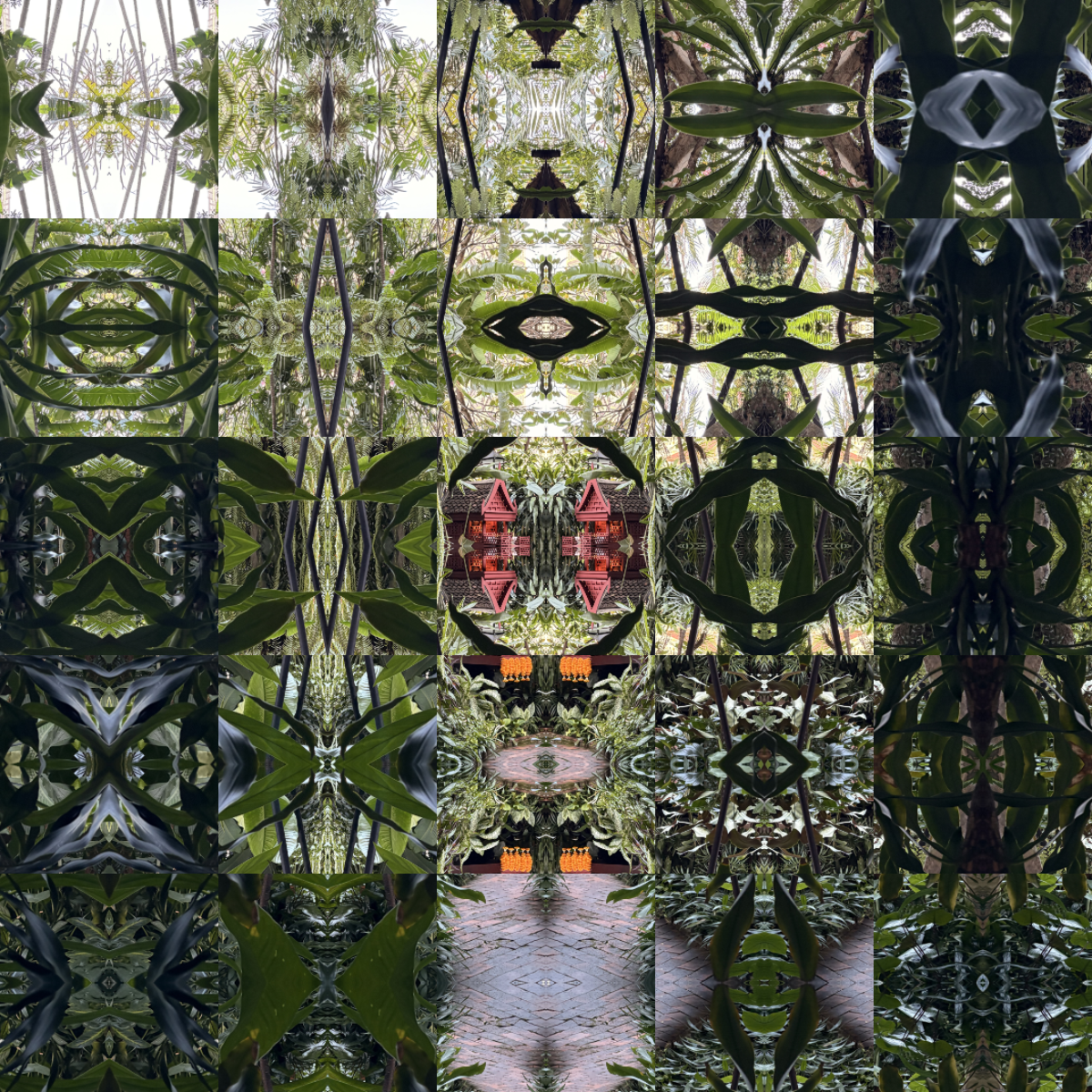
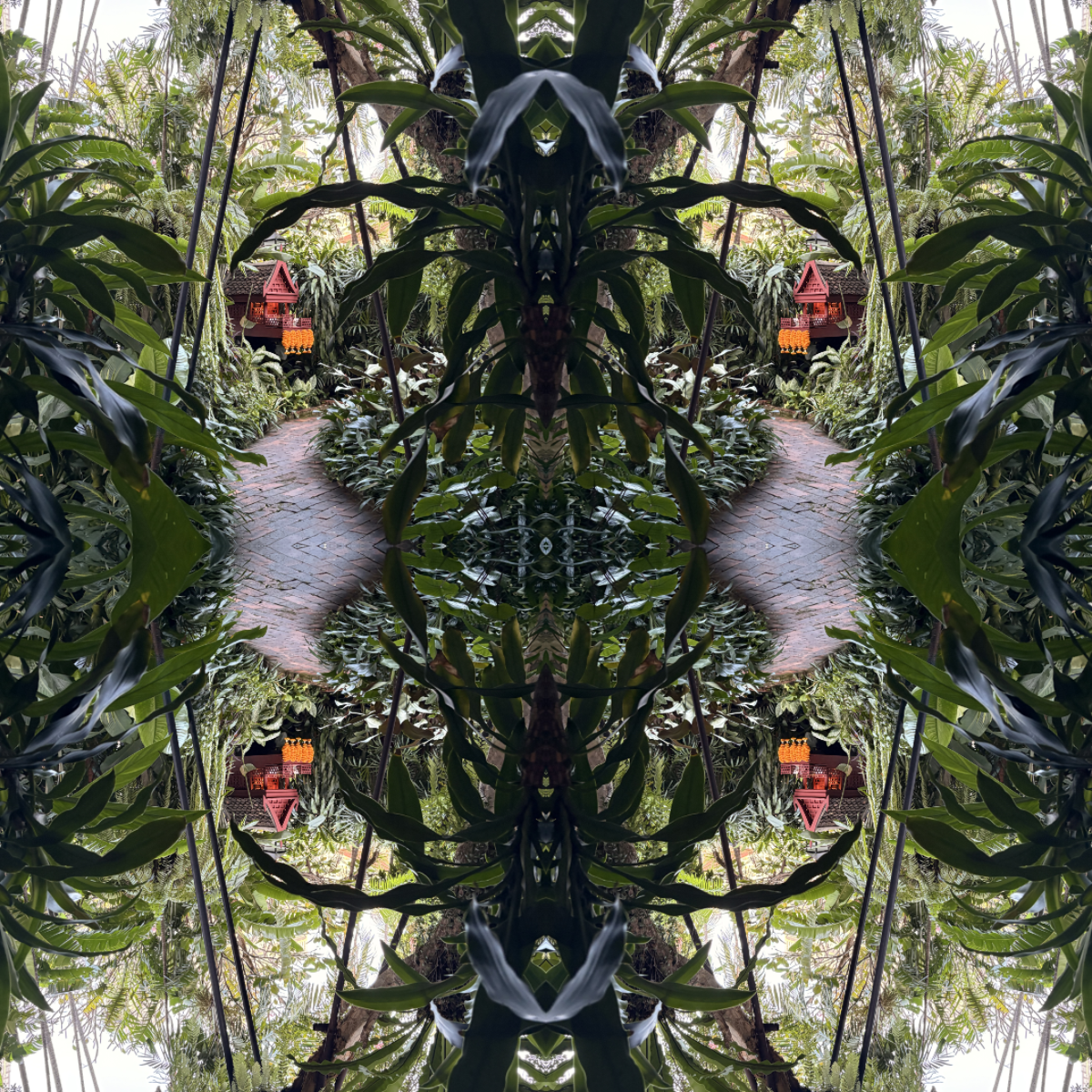
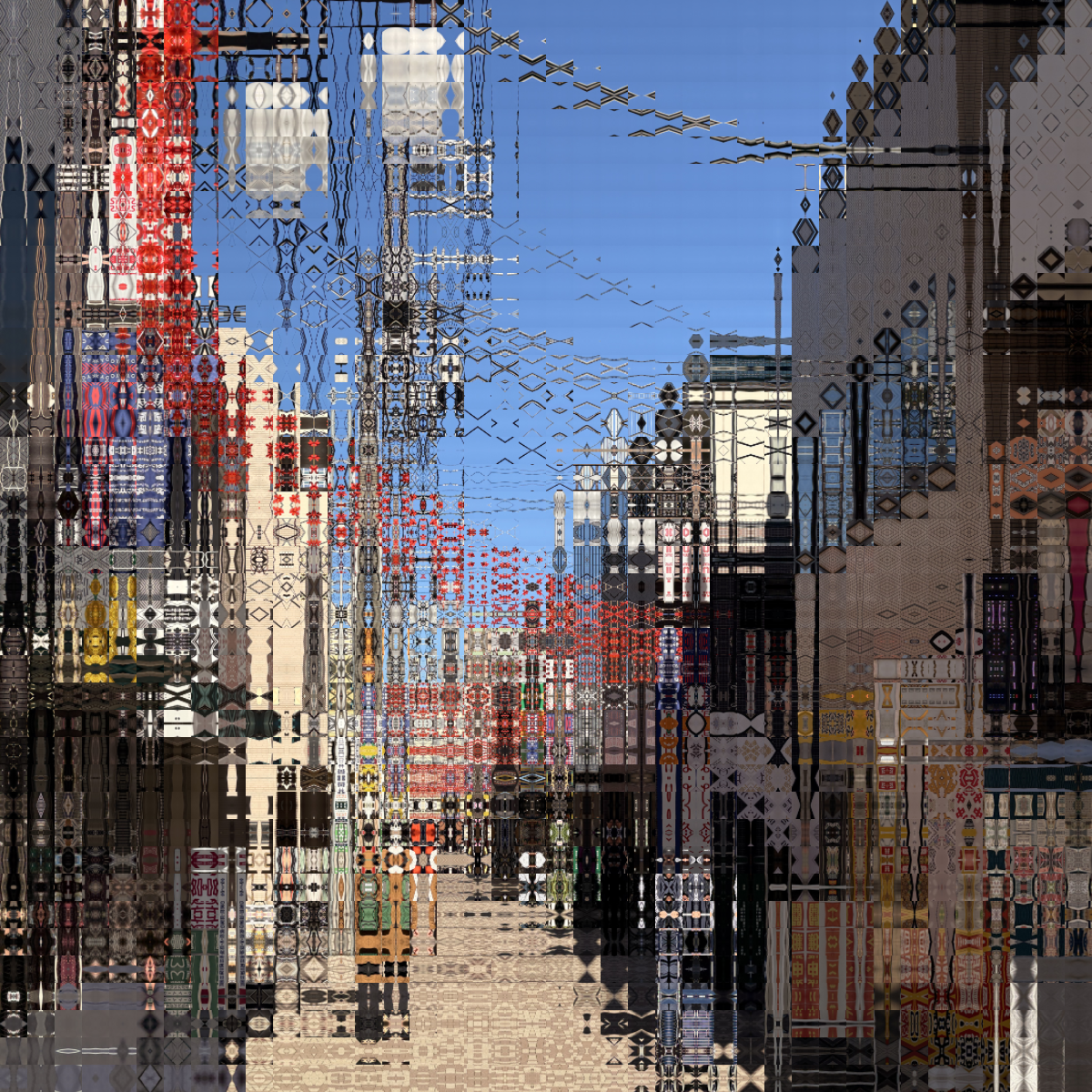
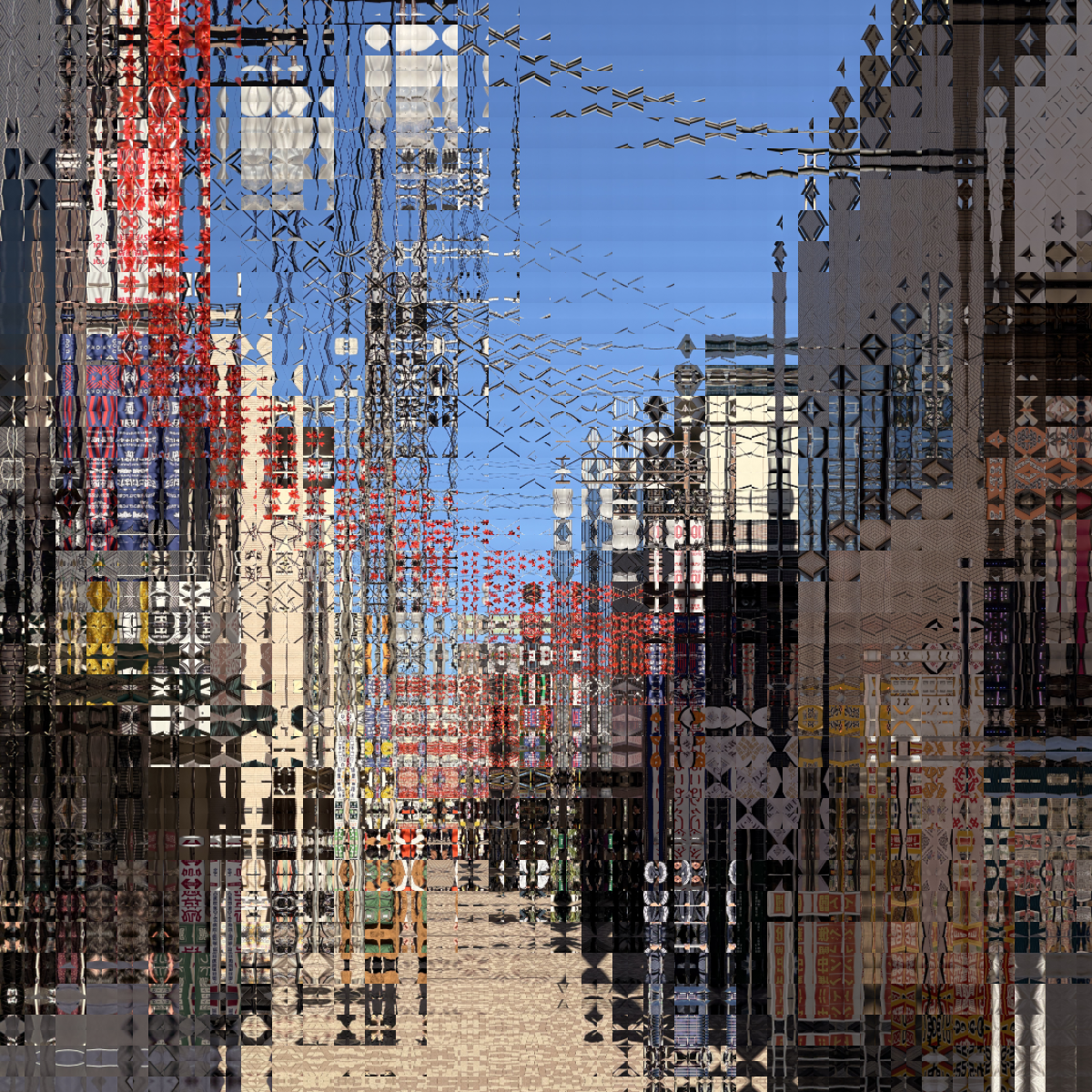
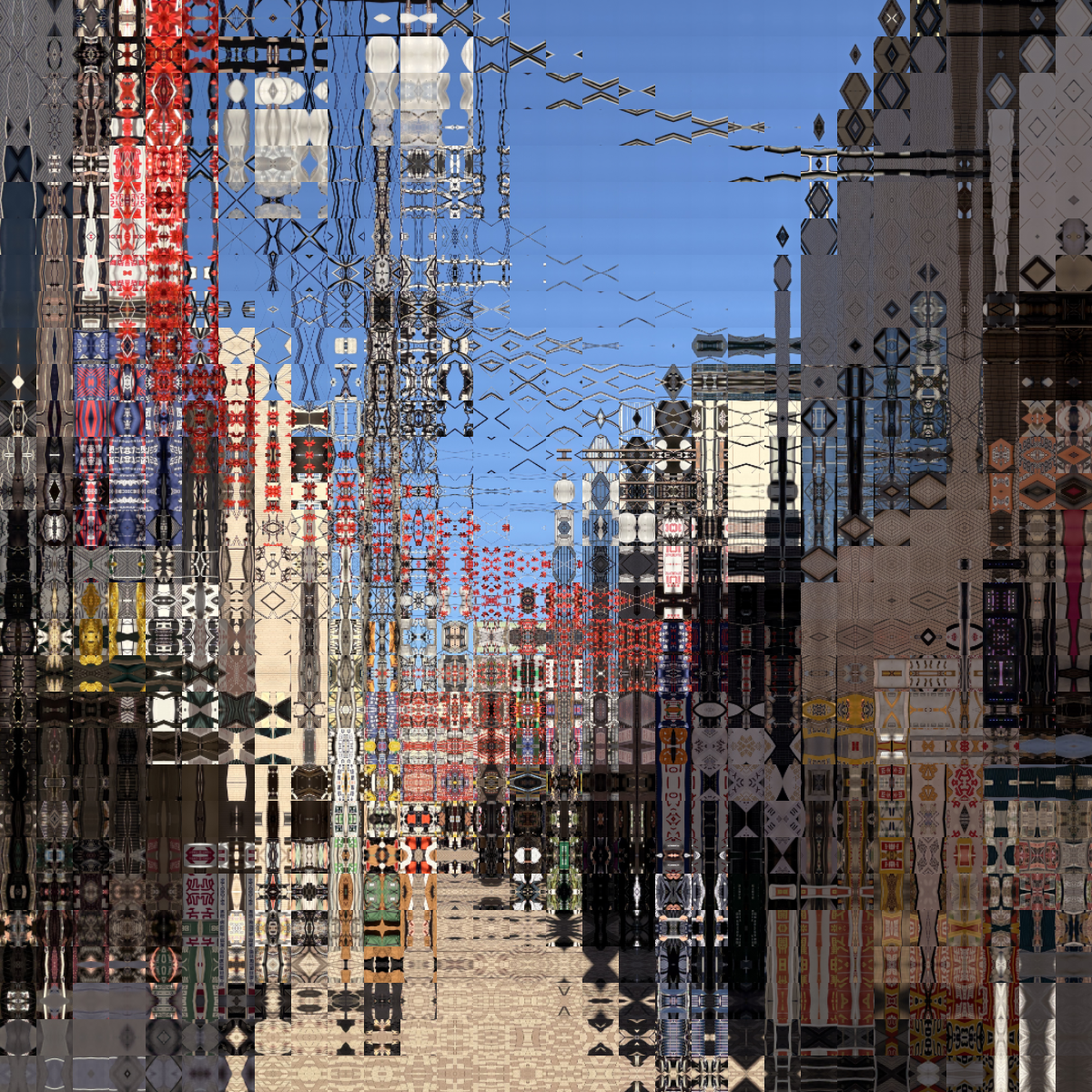
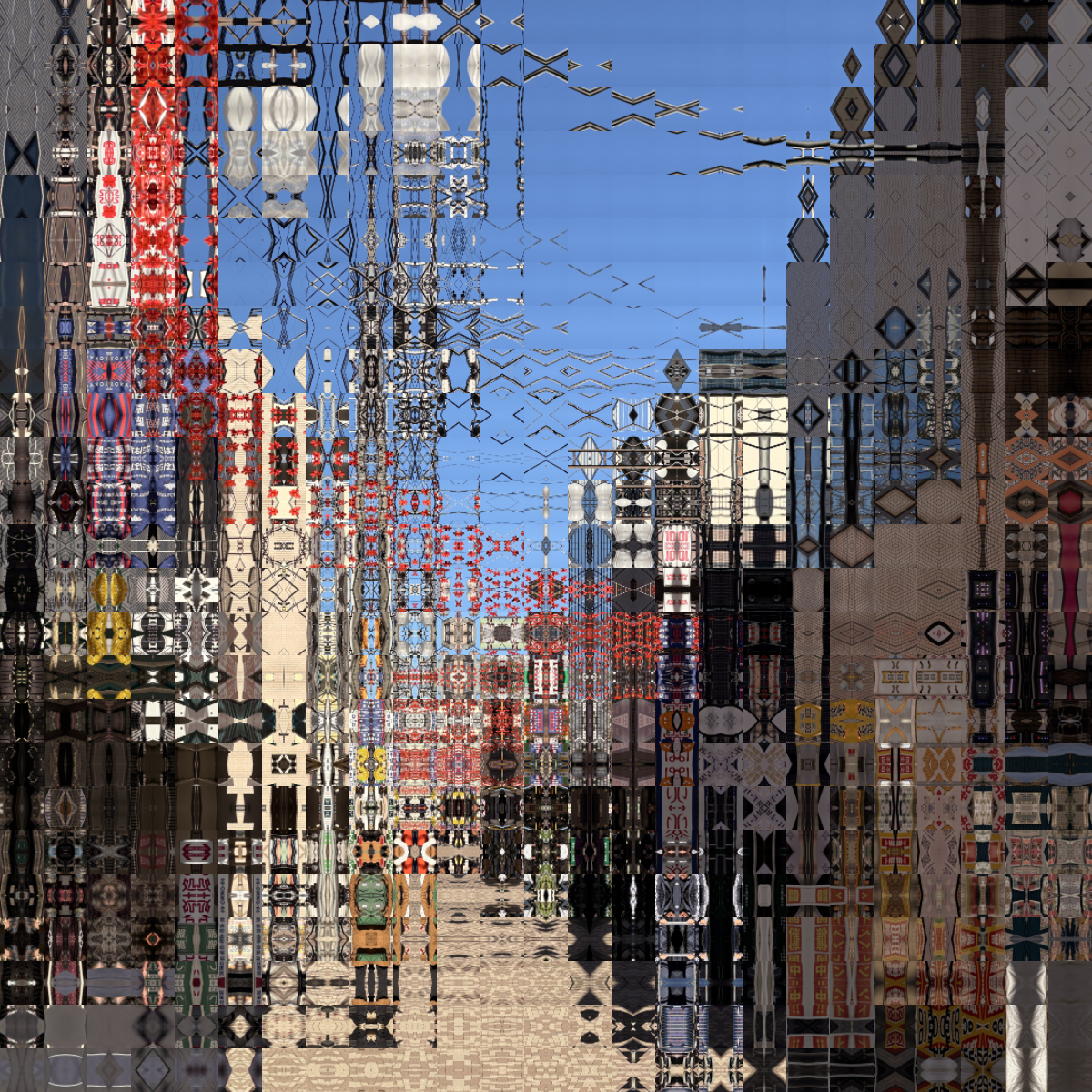
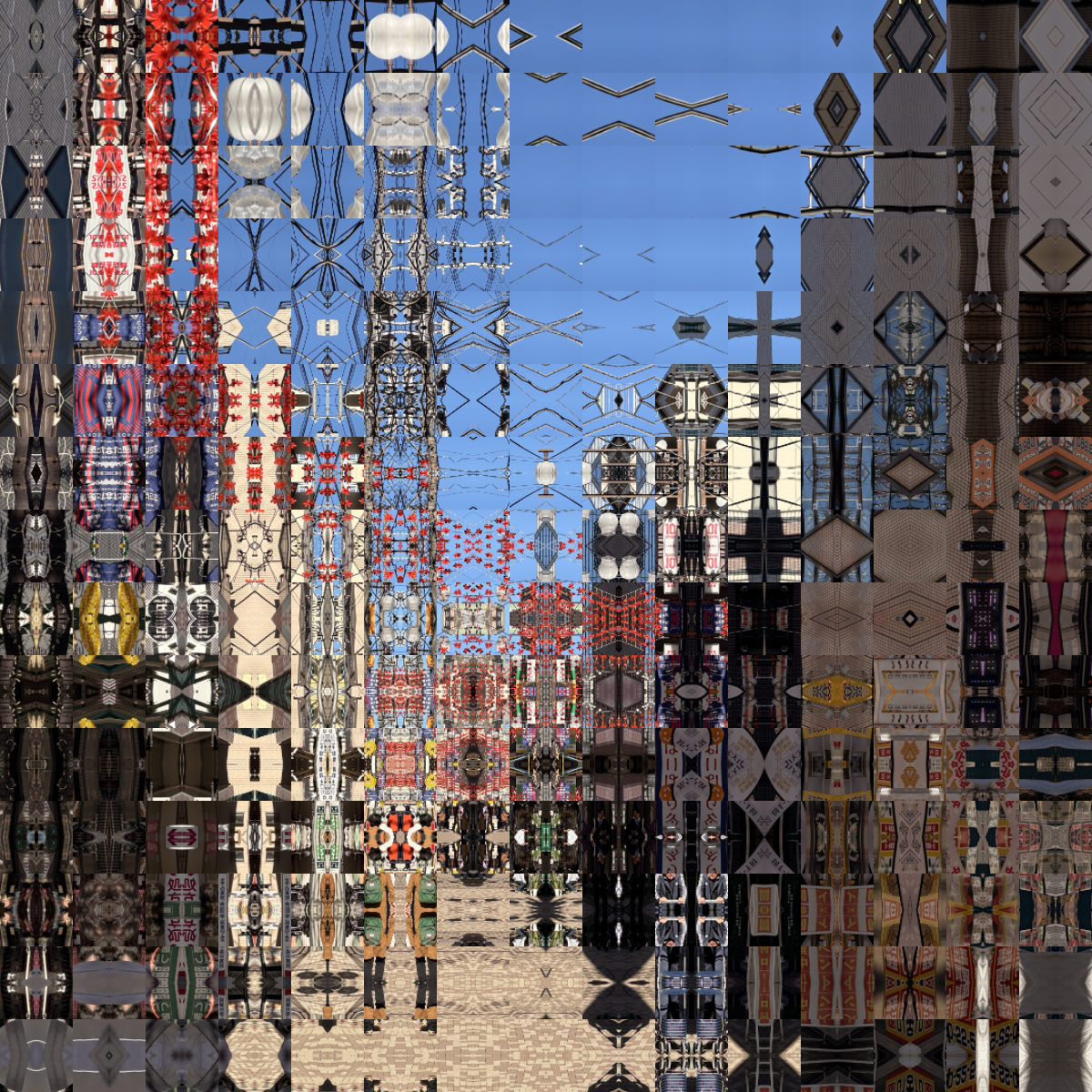
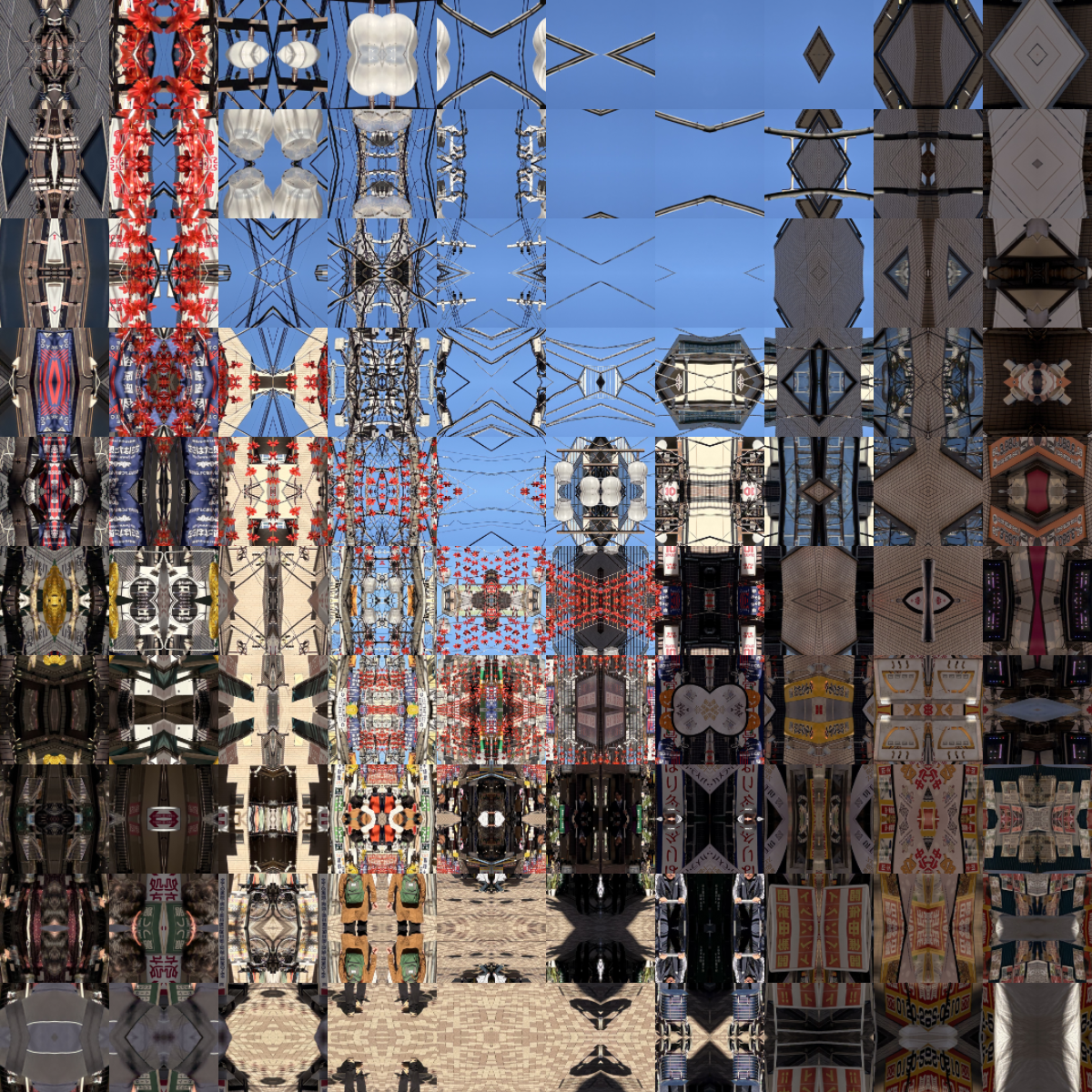
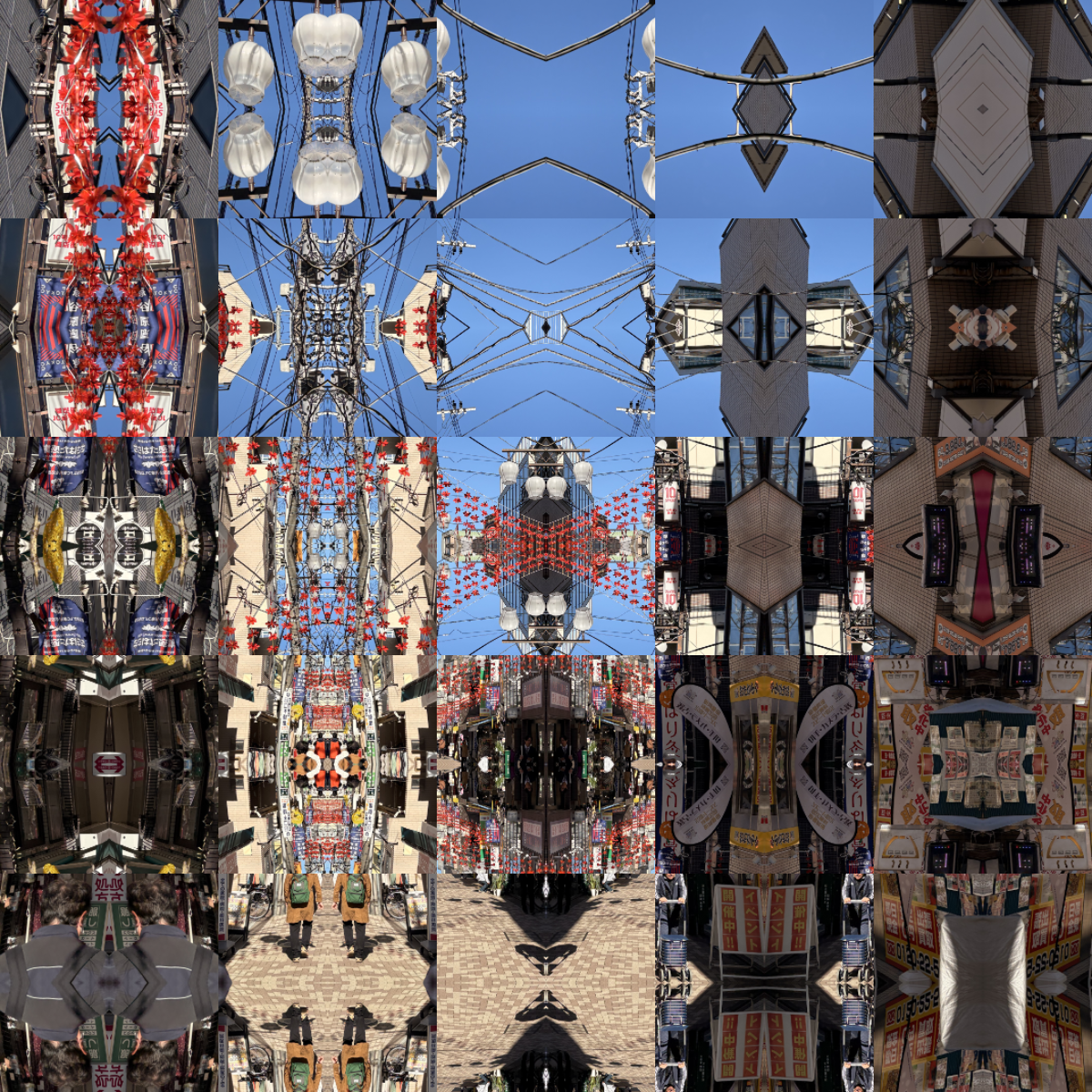
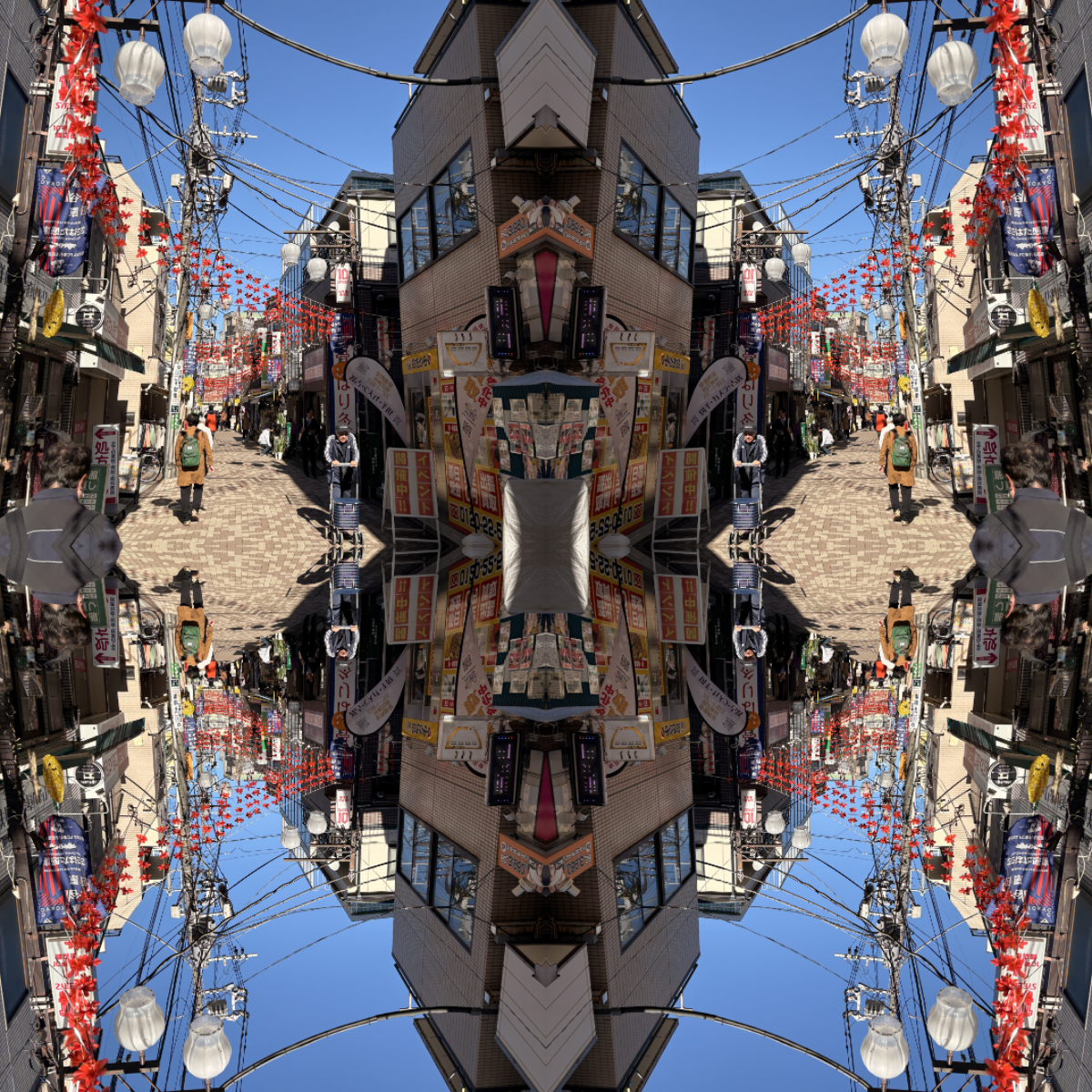
The Tessellation Frame fragments an image into a grid of smaller units and reassembles them into nested or repeated structures. Portions of the image are extracted, shifted, and reinserted into the composition, creating recursive frames that echo spatial feedback systems.
Through this process, the image becomes a layered field of partial representations. Edges, gradients, and silhouettes emerge as the primary perceptual cues, while recognisable detail gradually dissolves. Instead of a single stable depiction, the viewer encounters a composition built from overlapping fragments and spatial echoes.
This frame explores how subdivision, repetition, and spatial displacement can preserve atmospheric qualities while removing explicit semantic content.
Access the functional
Tessellation Frame online
tool here





Histogram Frame
Color distribution preserved, structure reassembled
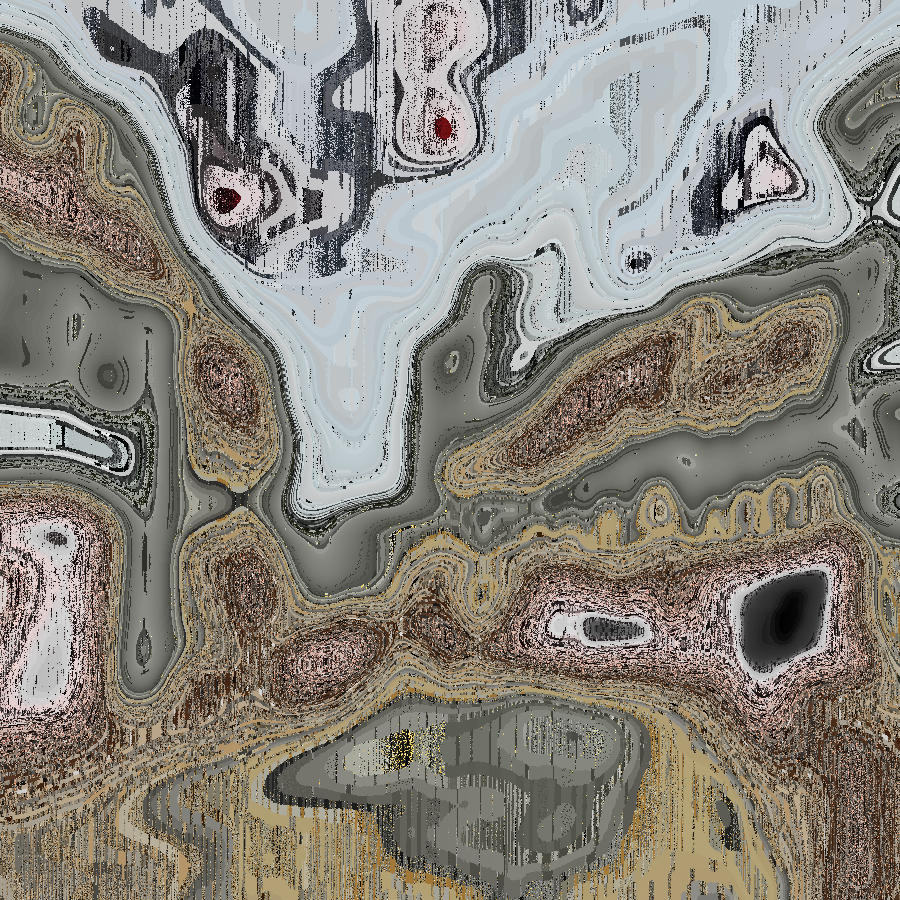
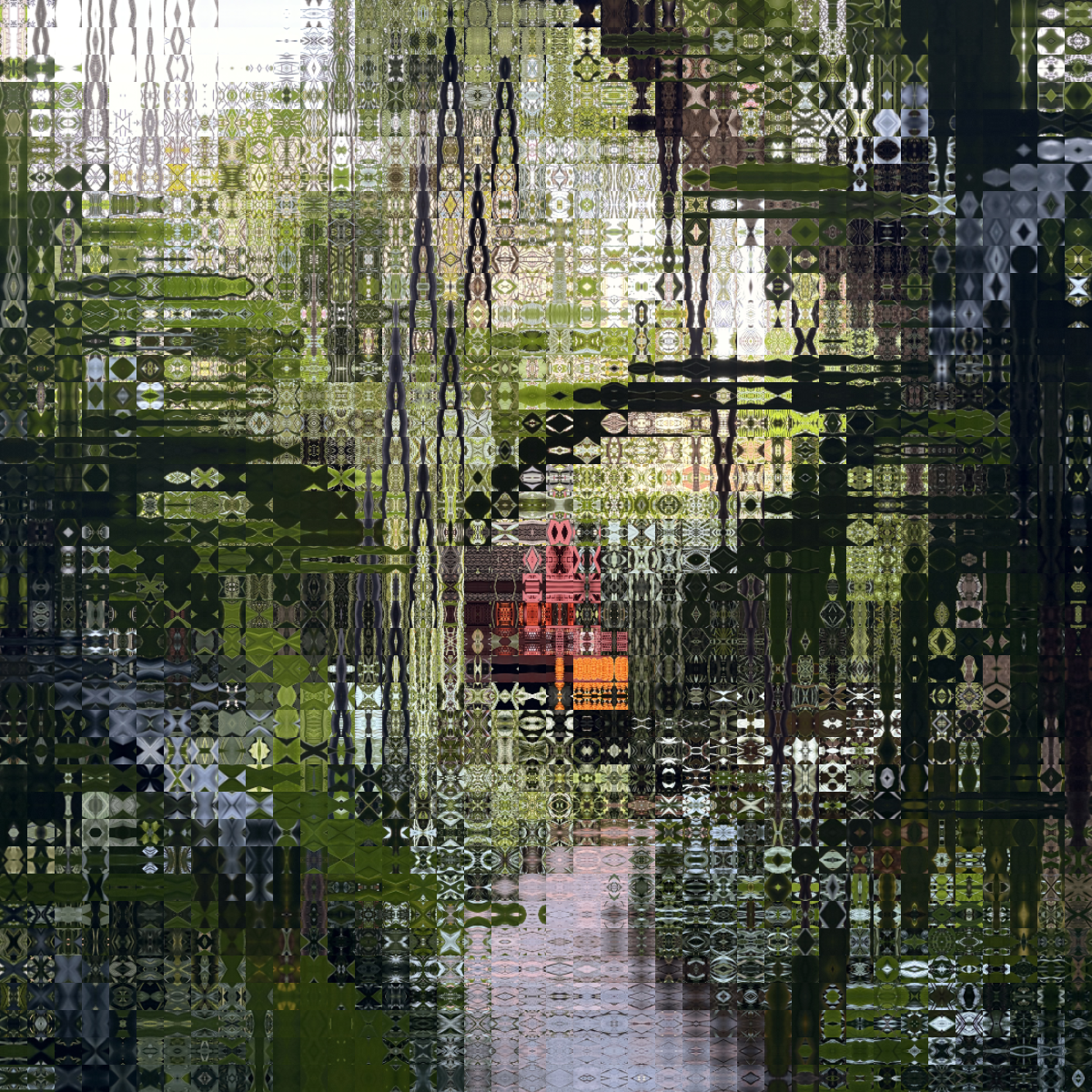
The Histogram Frame transforms an image by reorganising its pixels while preserving the overall color distribution. Instead of altering the palette, the frame redistributes the image’s internal structure according to perceptual rules derived from luminance fields, blur patterns, or sorted color values.
Through this process, the semantic structure of the original scene is largely removed, while its chromatic and atmospheric qualities remain intact. The resulting images appear familiar in tone and mood, yet lack clear objects or identifiable forms.
This frame treats the image as a collection of perceptual signals rather than a representation of objects. By preserving the histogram while altering spatial relationships, it produces compositions that maintain visual coherence without relying on recognisable content. The tool investigates how color distribution, spatial frequency, and structural abstraction shape perception when visual information is reduced.
Access the functional
Histogram Frame online
tool here