EPOCH
unexpected encounters via space and time intra-actions
Encounters Exhibition
Design Festa Gallery, Harajuku, Japan
May 2024
Burcu Nimet Dumlu, Lucas Ogasawara, Ismael Rasa and Carlos García Fernández
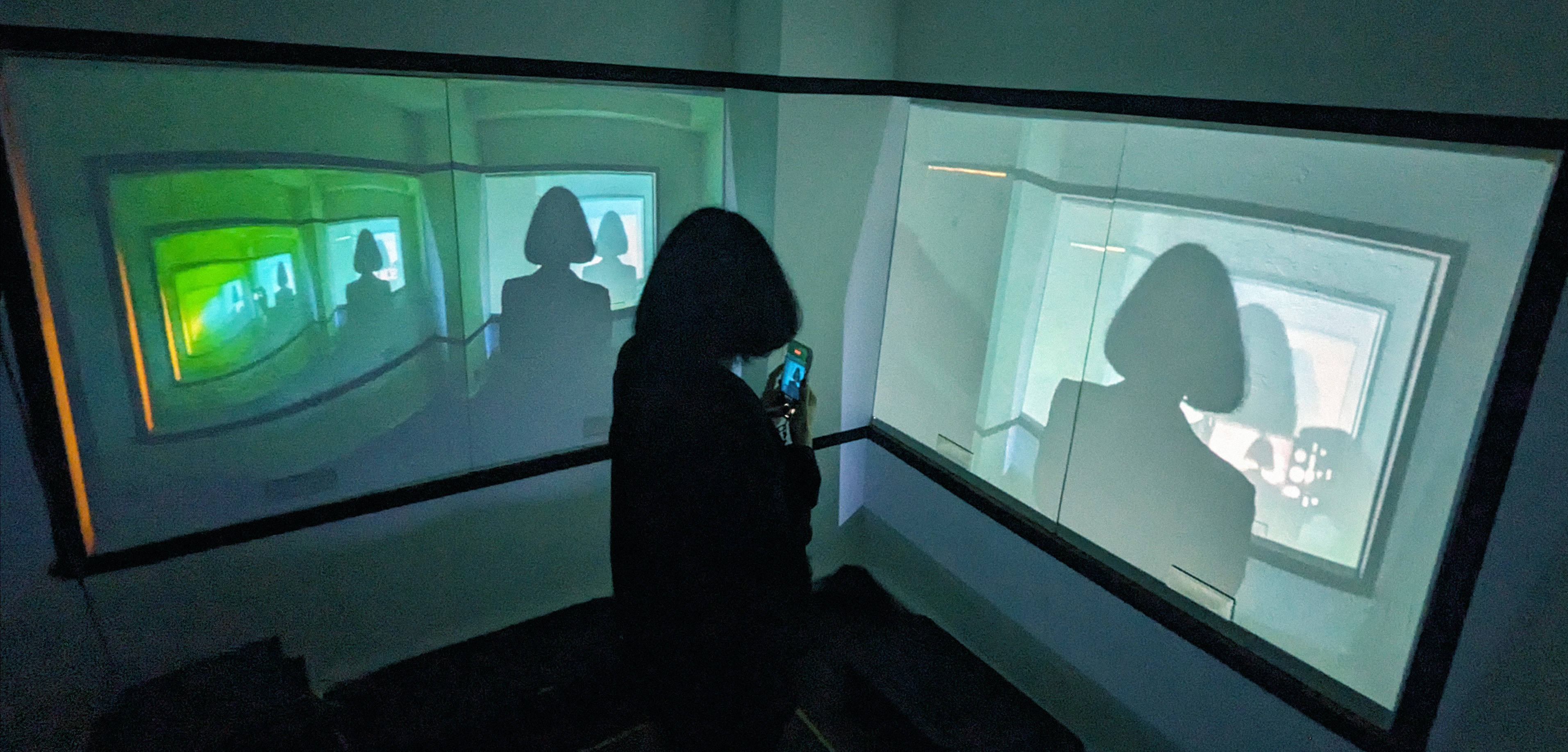
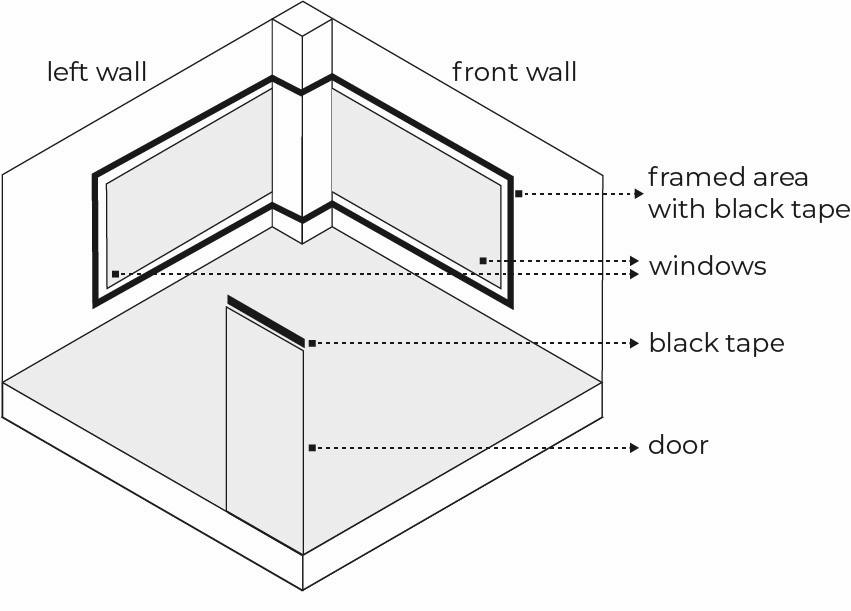
Epoch is an interactive installation that explores how space, time, and the self coexist within the reality–virtuality continuum. Inside a small enclosed room, visitors encounter layered audiovisual representations of their own recent past. A 360-degree camera captures the interior of the space, and the images are recursively projected onto the surrounding walls with different time delays. At the same time, sounds produced in the room are recorded and replayed through granular synthesis, creating fragmented echoes of previous actions.
Within this closed feedback system, visitors are confronted with multiple temporal versions of themselves. Past and present actions overlap, producing a shifting perceptual environment where the boundaries between the real and the virtual become unstable.
The installation invites participants to interact with these layered traces, turning the room into a space where the self is continuously re-encountered through delayed representations.
Within this closed feedback system, visitors are confronted with multiple temporal versions of themselves. Past and present actions overlap, producing a shifting perceptual environment where the boundaries between the real and the virtual become unstable.
The installation invites participants to interact with these layered traces, turning the room into a space where the self is continuously re-encountered through delayed representations.
Entanglement of Space, Time, and the Self
Our existence is intrinsically entangled with space, time, and the living and non-living entities around us. Every action leaves traces in the environments we inhabit, regardless of whether we consciously act upon them.
Epoch draws attention to these entanglements by allowing visitors to intra-act with images grounded in their immediate surroundings, yet temporally displaced. As delayed projections accumulate, the distinctions between present experience and recorded traces begin to blur, challenging the stability of spatial and temporal perception.

Interaction with Temporal Traces
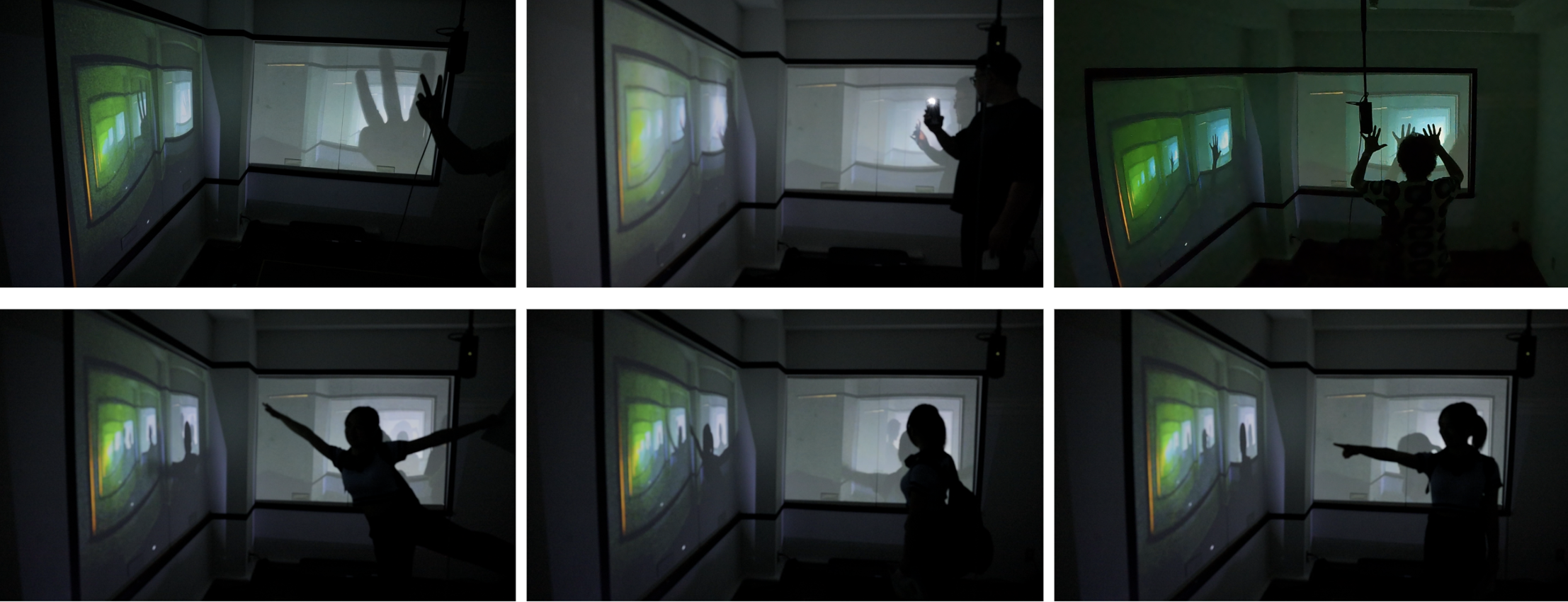
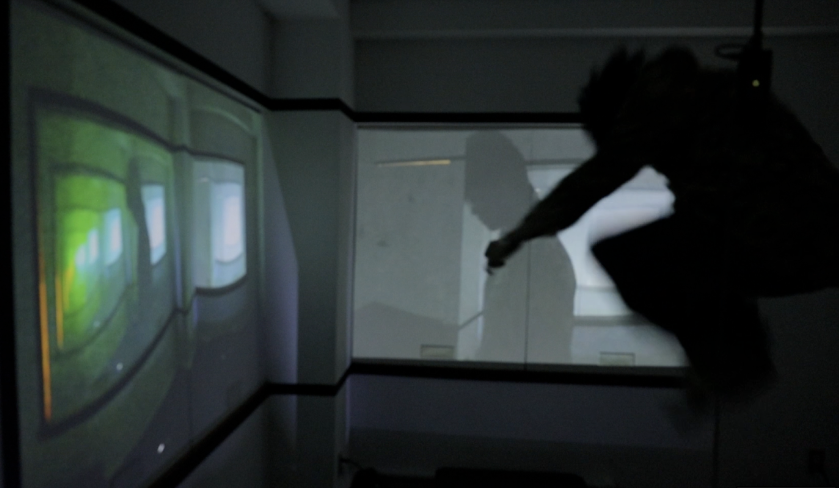
Visitors typically begin by testing the relationship between their movements and the delayed projections. Observations showed behaviors such as synchronized gestures, playful performances, or attempts to communicate with earlier versions of themselves.
These actions create a form of dialogue across time, where the present self interacts with traces of its own recent past. The installation thus becomes a space for exploratory interaction, where perception, memory, and bodily presence are continuously renegotiated.
Temporal Architecture
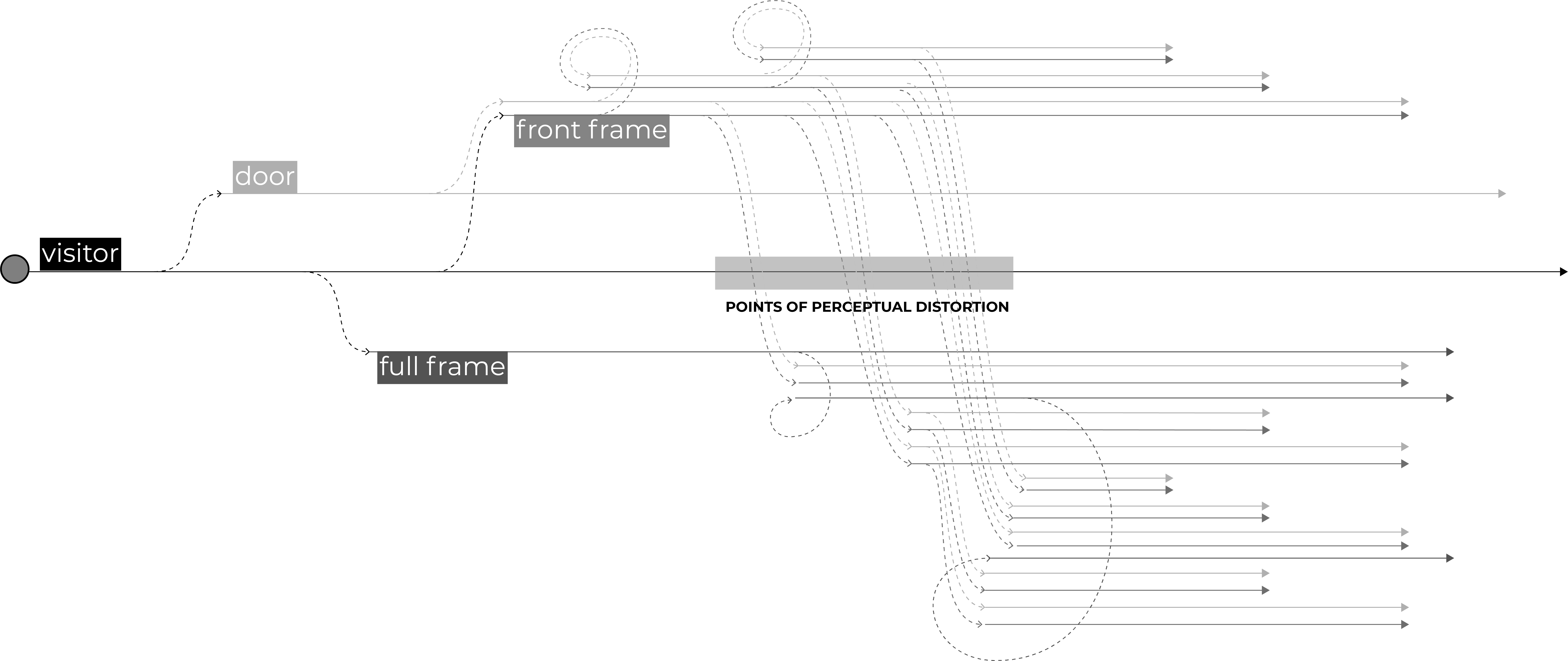
The installation operates through a minimal closed-loop audiovisual system. The captured video stream is split into multiple segments and projected back into the room with different delays, embedding earlier moments inside later ones.
Audio follows a similar logic: short recordings are replayed through granular synthesis, producing discontinuous echoes that circulate through the space.
Through this recursive structure, time becomes a spatial material. The room does not simulate another environment; instead, it reconfigures its own recent past, forming a layered architecture made of temporal fragments